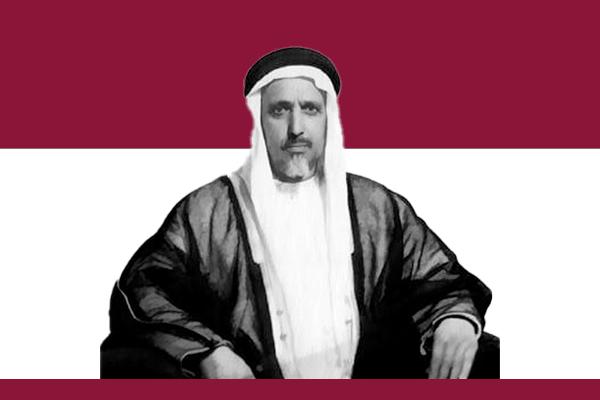
Early Life and Background
Ali bin Abdullah Al Thani was born in 1895 into the ruling Al Thani family, which has governed Qatar since the 19th century. He was the son of Abdullah bin Jassim Al Thani, who ruled Qatar for many years and strengthened its political stability.
As a young prince, Ali bin Abdullah learned leadership, tribal politics, and governance from his father. He grew up during a difficult time when Qatar’s economy depended heavily on pearl diving. However, the pearl industry collapsed in the 1930s due to global economic depression and the introduction of cultured pearls.
Becoming Emir of Qatar
In 1949, Abdullah bin Jassim Al Thani abdicated the throne, and Ali bin Abdullah Al Thani became the new Emir. His rule came at a turning point in Qatar’s history because oil exports had recently begun.
When he assumed power, Qatar was still under British protection, and its infrastructure was very limited. There were few schools, hospitals, or modern roads. Ali bin Abdullah understood that oil revenues could help improve the country.
Contribution to Qatar’s Economic Development
One of the most important achievements of Ali bin Abdullah Al Thani was managing Qatar’s early oil wealth. Oil exports started in 1949, the same year he became Emir. This new income allowed the government to begin development projects.
He used oil revenues to:
- Build modern infrastructure
- Improve living standards
- Develop administrative institutions
- Provide basic public services
His leadership marked the beginning of Qatar’s transformation into a modern state.
Administrative and Social Reforms
Ali bin Abdullah Al Thani also worked to establish government departments to manage the country effectively. Before oil, Qatar had very simple administration, but oil wealth required better organization.
He introduced reforms such as:
- Creating government offices
- Strengthening internal security
- Improving relations with Britain and neighboring countries
These steps helped Qatar become more organized and stable.
Challenges During His Rule
Despite the benefits of oil wealth, his reign was not without challenges. Rapid modernization created social and economic changes. Managing oil revenues fairly and efficiently was a difficult task.
There were also political pressures from both internal groups and external influences. Qatar was still under British protection, which limited its independence.
Abdication and Later Life
In 1960, Ali bin Abdullah Al Thani abdicated in favor of his son, Ahmad bin Ali Al Thani. His son continued the modernization process.
After stepping down, Ali bin Abdullah lived a quiet life. He passed away in 1974.
Legacy and Importance
Ali bin Abdullah Al Thani is remembered as a key figure in Qatar’s modern history. His reign marked the beginning of oil-driven economic growth.
His main contributions include:
- Guiding Qatar during its early oil era
- Starting modernization programs
- Establishing government administration
- Improving national income and living conditions
He helped transform Qatar from a poor desert state into a developing nation with a strong future.
Conclusion
Ali bin Abdullah Al Thani played a crucial role in shaping modern Qatar. His leadership during the early oil period helped the country move toward progress and development. Although his reign was relatively short, his decisions had long-lasting effects. Today, he is remembered as one of the important Emirs who helped build the foundation of Qatar’s prosperity and modernization.