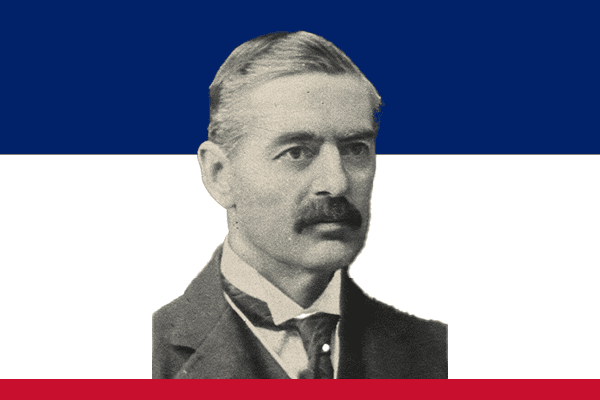
Mr. Neville Chamberlain
In Office: 28 May 1937 – 10 May 1940
Political Party: Conservative
Home State: Lossiemouth
Lifespan: 1869–1940
Country: United Kingdom
Image credits available here.
Early Life and Political Career
Neville Chamberlain was born on March 18, 1869, in Birmingham, England. He was the son of Joseph Chamberlain, an influential political figure. Chamberlain initially worked in business before entering politics. In 1918, he won election as a Member of Parliament for Birmingham Ladywood and quickly gained a reputation as a capable administrator.
During the 1920s and 1930s, Chamberlain held several important government positions. He served as Minister of Health and later as Chancellor of the Exchequer. In these roles, he introduced reforms in housing, public health, and financial policy. His efficient management and strong leadership earned him respect within the Conservative Party.
Becoming Prime Minister
In May 1937, Chamberlain succeeded Stanley Baldwin as Prime Minister of the United Kingdom. At the time, Europe faced increasing tension due to the aggressive policies of Nazi Germany under Adolf Hitler. Chamberlain believed that negotiation and compromise could prevent another large-scale war similar to World War I.
His government focused on maintaining peace while strengthening Britain’s defenses. Chamberlain increased military spending and supported the modernization of the Royal Air Force. At the same time, he pursued diplomatic efforts to resolve conflicts in Europe.
The Policy of Appeasement
Chamberlain became closely associated with the policy of appeasement. He believed that satisfying some of Germany’s territorial demands might prevent war. This approach led to the famous Munich Agreement in September 1938. Britain, France, Germany, and Italy agreed that Germany could annex the Sudetenland region of Czechoslovakia.
After signing the agreement, Chamberlain returned to Britain and declared that the agreement had secured “peace for our time.” Many people initially welcomed the deal because it seemed to prevent immediate war. However, critics argued that the agreement allowed Hitler to expand his power without resistance.
The Outbreak of World War II
The policy of appeasement failed when Germany invaded Poland in September 1939. Britain and France responded by declaring war on Germany, marking the beginning of World War II. Chamberlain now faced the enormous challenge of leading Britain during wartime.
During the early months of the war, known as the “Phoney War,” little direct fighting occurred on the Western Front. However, criticism of Chamberlain’s leadership increased after Germany successfully invaded Norway in 1940. Many members of Parliament questioned his ability to lead the nation during a full-scale war.
Resignation and Later Life
In May 1940, Chamberlain resigned as Prime Minister. Winston Churchill succeeded him and formed a new coalition government. Although Chamberlain stepped down, he continued to serve in the government as Lord President of the Council.
Later that year, Chamberlain’s health declined due to cancer. He died on November 9, 1940, in England at the age of 71.
Legacy
Neville Chamberlain’s legacy remains complex. Many critics blame his policy of appeasement for enabling Hitler’s expansion. Others argue that Britain needed time to strengthen its military and that Chamberlain’s diplomacy delayed the war long enough for the country to prepare.