Mr. Harold Wilson
In Office: 4 March 1974 – 5 April 1976
16 October 1964 – 19 June 1970
Political Party: Conservative
Home State: Cowlersley
Lifespan: 1916–1995
Country: United Kingdom
Image credits available here.
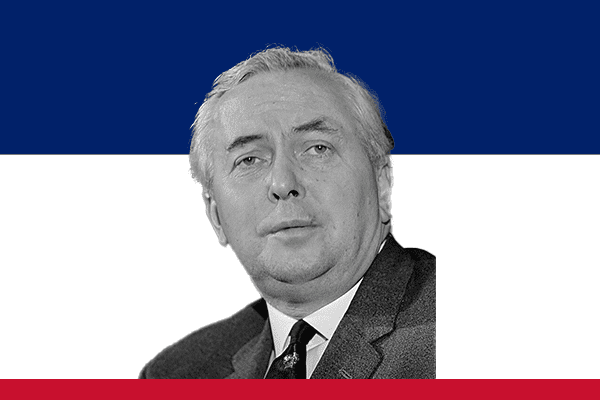
Early Life and Political Rise
Harold Wilson was born on 11 March 1916 in Huddersfield, West Yorkshire, England. He came from a middle-class family that valued education and public service. Wilson studied at Jesus College, Oxford, where he excelled in economics and developed a strong interest in politics. During the Second World War, he worked in government departments and gained experience in administration and economic planning. After the war, he entered Parliament in 1945 as the Labour Member of Parliament for Ormskirk.
Wilson quickly built a reputation as a talented and intelligent politician. He served in the government of Prime Minister Clement Attlee and became President of the Board of Trade at a young age. In 1951, he resigned from the cabinet in protest against health service charges, a move that increased his standing within the Labour Party. In 1963, he became Leader of the Labour Party after the sudden death of Hugh Gaitskell.
First Term as Prime Minister
Harold Wilson became Prime Minister in 1964 after Labour narrowly defeated the Conservative Party. He presented himself as a modern leader who wanted to transform Britain through science, technology, and economic reform. One of his most famous phrases referred to the “white heat of technological revolution,” which symbolized his belief in modernization.
During his first period in office, Wilson’s government introduced important social reforms. These included changes related to education, race relations, divorce law, and the death penalty. His government also expanded support for universities and promoted greater opportunities for young people. However, economic difficulties remained a major challenge. Britain faced balance of payments problems, inflation, and pressure on the value of the pound. In 1967, Wilson’s government devalued the pound, a decision that damaged his image and created political problems.
Second Term and Later Leadership
After losing the 1970 general election to Edward Heath, Wilson returned to power in 1974. Britain at that time faced serious economic trouble, high inflation, labour strikes, and political instability. Wilson worked to reduce tensions between trade unions and the government. He also held a national referendum in 1975 on whether Britain should remain in the European Economic Community. The public voted to stay, and this helped settle a major political debate for a time.
In 1976, Wilson unexpectedly resigned as Prime Minister. Many people were surprised by his decision because he still held power. He was succeeded by James Callaghan.
Legacy
Harold Wilson remains an important figure in British political history. He led the country during a period of transition and introduced reforms that reflected changing attitudes in society. His governments supported modernization, social change, and Britain’s role in Europe. Although economic problems limited some of his ambitions, he showed political skill and resilience. Wilson’s long career and two terms as Prime Minister made him one of the most notable Labour leaders of the twentieth century.