Mr. Justinus van der Brugghen
In Office: 1 July 1856 – 18 March 1858
Political Party: Independent Antirevolutionary
Home State: Nijmegen
Lifespan: 1804–1863
Country: Netherland
Image credits available here.
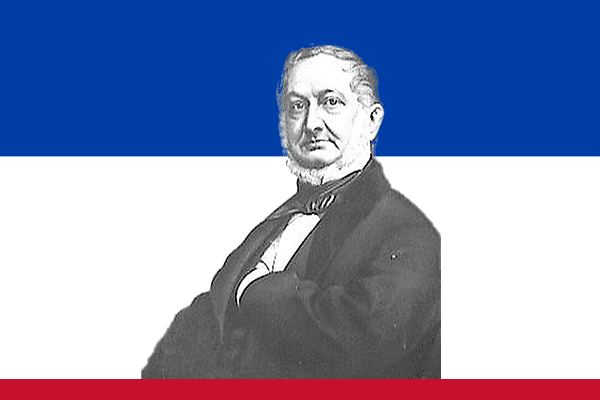
Early Life and Education
Justinus van der Brugghen was born on 25 August 1804 in Nijmegen, the Netherlands. He came from a well-educated family and developed an interest in law and public service at a young age. He studied law and later built a successful career as a lawyer and legal thinker. His education gave him a strong understanding of justice, governance, and constitutional principles. These qualities later helped him in his political life.
Van der Brugghen also became known for his religious and ethical beliefs. He believed that public life should reflect moral responsibility and fairness. This outlook shaped many of his decisions and made him a respected voice among Dutch reformers and intellectuals.
Political Career
Before becoming Prime Minister, Justinus van der Brugghen worked in several legal and political roles. He gained recognition for his knowledge of constitutional matters and his moderate political position. He did not fully belong to the radical liberal camp, but he also did not support rigid conservatism. Instead, he tried to create practical solutions that could unite different groups.
His balanced approach made him suitable for leadership during a time when the Netherlands was adjusting to the constitutional reforms introduced in 1848. These reforms had reduced the king’s direct political power and strengthened parliamentary government. Van der Brugghen understood this new political order and worked within it carefully.
Prime Minister of the Netherlands
Justinus van der Brugghen served as Prime Minister of the Netherlands from 1 July 1856 to 18 March 1858. During his time in office, he led a moderate cabinet and tried to maintain stability in a politically divided country. One of the most important issues of his government was education reform. He supported policies that aimed to improve schooling while also respecting religious concerns, which was a sensitive matter in Dutch society.
His cabinet introduced the Primary Education Act of 1857, an important reform in Dutch educational history. This law improved the organization and quality of primary education and helped create a stronger foundation for public schooling. Although not everyone agreed with the law, it became one of the major achievements of his administration.
Van der Brugghen’s government faced criticism from both liberals and conservatives. His middle-path approach often made it difficult to satisfy all political groups. As tensions increased, his cabinet eventually lost support, and he left office in 1858.
Legacy and Historical Importance
Although Justinus van der Brugghen served for less than two years as Prime Minister, he left a meaningful legacy. He represented a generation of Dutch leaders who helped strengthen constitutional government after major reforms. His work in education showed his belief in social improvement and responsible governance.
People remember him for his integrity, legal expertise, and calm leadership style. He did not seek dramatic political confrontation. Instead, he focused on careful reform and national stability. This approach may have limited his popularity in a divided political climate, but it also demonstrated his sense of duty.
Justinus van der Brugghen died on 2 October 1863. Even after his death, historians continued to view him as a principled statesman who helped guide the Netherlands through an important stage of political development.
Conclusion
Justinus van der Brugghen remains an important figure in Dutch political history. As Prime Minister, he worked to strengthen constitutional rule, improve education, and promote balanced government. His career shows how thoughtful leadership can leave a lasting impact, even in a short time.