Mr. Jan Heemskerk
In Office: 23 April 1883 – 20 April 1888
27 August 1874 – 3 November 1877
Political Party: Independent Conservative
Home State: Amsterdam
Lifespan: 1818–1897
Country: Netherland
Image credits available here.
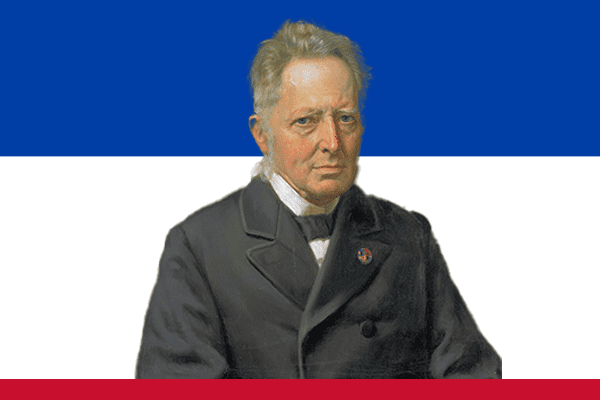
Early Life and Education
Jan Heemskerk was born on July 20, 1818, in Amsterdam, Netherlands. He grew up in a politically aware family; his father, Jan Heemskerk Bzn., also worked as a politician and minister. Because of this environment, Heemskerk developed an early interest in law, governance, and public service.
He studied law at Utrecht University, where he built a strong academic foundation in constitutional law and political philosophy. After completing his studies, he began working as a lawyer and soon gained recognition for his analytical thinking and persuasive arguments. His legal background prepared him for a career in public administration and politics.
Entry into Politics
Jan Heemskerk entered Dutch politics in the mid-nineteenth century when he was elected to the House of Representatives. During this period, the Netherlands experienced important political reforms after the constitutional revision of 1848. These changes increased parliamentary power and reshaped the relationship between the monarchy and the government.
Heemskerk quickly established himself as a capable conservative leader. He supported a balanced political system that respected both constitutional reforms and traditional institutions. His speeches in parliament reflected careful reasoning, and fellow politicians respected his ability to negotiate and build consensus.
First Term as Prime Minister
In 1874, Jan Heemskerk became Prime Minister of the Netherlands for the first time. During this period, he led a conservative government that focused on administrative efficiency and financial responsibility. His cabinet aimed to maintain political stability and manage the growing influence of liberal and progressive movements.
Although his first term lasted only until 1877, Heemskerk gained valuable experience as a national leader. He strengthened cooperation within the cabinet and demonstrated his ability to guide complex policy discussions in parliament.
Second Term and Political Influence
Heemskerk returned to power in 1883 and served as Prime Minister until 1888. This second term proved far more influential. During these years, Dutch politics revolved around the controversial “school struggle,” a debate over government funding for religious and public schools.
Heemskerk strongly supported policies that provided equal financial support to religious schools. His government introduced legislation that helped religious education institutions receive greater recognition and support. This decision pleased many religious communities, particularly Protestants and Catholics, and reinforced conservative political alliances.
His leadership style emphasized order, compromise, and gradual reform rather than radical change. By carefully balancing political interests, he maintained government stability during a time of intense ideological debate.
Leadership Style and Policies
Jan Heemskerk showed a pragmatic and disciplined leadership style. He focused on practical governance instead of dramatic political gestures. His policies often reflected conservative principles such as respect for tradition, responsible budgeting, and cooperation with religious groups.
He also strengthened administrative procedures and encouraged efficient government management. While some liberal politicians criticized his conservative approach, many citizens appreciated the stability his leadership provided.
Legacy
Jan Heemskerk left a lasting impact on Dutch political history. His leadership during the school funding debates shaped the relationship between religion and education in the Netherlands for decades. Historians recognize him as one of the key conservative statesmen of the nineteenth century.
He retired from active politics after his second term but remained a respected public figure until his death on October 9, 1897. Today, scholars remember him as a thoughtful administrator who guided the Netherlands through a complex era of political change.
Conclusion
Jan Heemskerk played a crucial role in Dutch governance during the late nineteenth century. Through his two terms as Prime Minister, he promoted stability, supported religious education rights, and strengthened conservative influence in national politics. His legal expertise, disciplined leadership, and commitment to balanced governance helped shape the development of the modern Dutch political system.