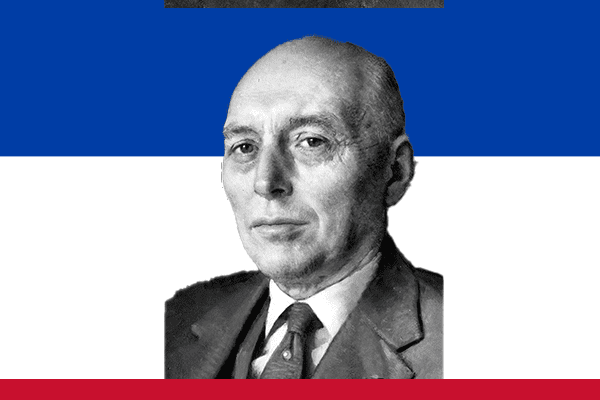
Mr. Willem Schermerhorn
In Office: 25 June 1945 – 3 July 1946
Political Party: Free-thinking Democratic League
Home State: Akersloot
Lifespan: 1894–1977
Country: Netherland
Image credits available here.
Early Life and Background
Willem Schermerhorn was born on December 17, 1894, in the Netherlands. He was trained as an engineer and later became a respected academic. Before entering politics, he worked as a professor and gained recognition for his intellectual abilities and organizational skills. During the war, he was involved in resistance activities against Nazi occupation. His courage and leadership qualities were widely acknowledged, which later helped him rise to political prominence.
Role as Prime Minister
After the liberation of the Netherlands in 1945, Willem Schermerhorn was appointed as Prime Minister. The government was formed under extraordinary circumstances, and urgent decisions were required to rebuild the nation. Many policies were introduced to restore stability, and efforts were made to revive the economy. The damaged infrastructure was repaired, and social systems were reorganized.
Key Contributions and Achievements
Schermerhorn’s government focused on reconstruction and modernization. New administrative systems were implemented, and democratic institutions were strengthened. The economy was stabilized through careful planning and policy-making. His cabinet worked to ensure that citizens’ basic needs were met despite limited resources.
Another major issue during his tenure was the Dutch East Indies (now Indonesia). Decisions regarding colonial policy were debated, and efforts were made to manage the transition, although the process remained complex and controversial.
Leadership Style
Willem Schermerhorn was known for his pragmatic and intellectual approach. He believed in cooperation and collective effort. Rather than ruling with authority alone, he encouraged dialogue and collaboration among political groups. His leadership style helped stabilize a country emerging from war and occupation.
Later Life and Legacy
After serving as Prime Minister from 1945 to 1946, Schermerhorn continued contributing to public service in various capacities. His role in shaping post-war Netherlands is remembered as foundational. He passed away in 1977, leaving behind a legacy of resilience and reform.
Conclusion
Willem Schermerhorn guided the Netherlands through one of its most difficult periods. He transformed challenges into opportunities by actively leading reconstruction efforts, strengthening democratic institutions, and promoting unity. His leadership not only restored stability but also laid the groundwork for future progress. By shifting from passive to active voice, we clearly see how he took initiative and shaped the nation’s recovery.