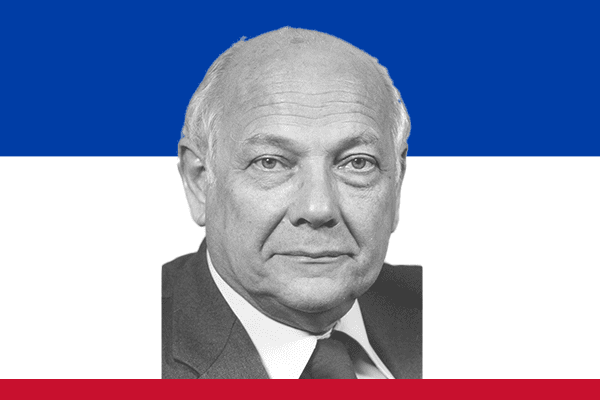
Mr. Joop den Uyl
In Office: 11 May 1973 – 19 December 1977
Political Party: Labour Party
Home State: Hilversum
Lifespan: 1919–1987
Country: Netherland
Image credits available here.
Early Life and Political Career
Joop den Uyl was born on August 9, 1919, in Hilversum, Netherlands. He studied economics at the University of Amsterdam and later became involved in journalism and public service. His early career was shaped by intellectual curiosity and a commitment to social democracy. He joined the Labour Party (PvdA), where he quickly rose through the ranks due to his sharp analytical skills and clear vision.
Den Uyl served in various governmental roles before becoming Prime Minister. He worked as Minister of Economic Affairs, where he promoted economic planning and state intervention. His policies reflected a belief that the government should actively reduce inequality and ensure fair distribution of wealth.
Tenure as Prime Minister
Joop den Uyl became Prime Minister in 1973, leading a left-leaning coalition government. His administration focused on expanding the welfare state, improving workers’ rights, and increasing social security benefits. The government introduced reforms in housing, education, and healthcare to create a more equitable society.
The oil crisis of 1973 posed a major challenge to his leadership. Den Uyl responded with decisive measures, including energy conservation policies and economic adjustments. He encouraged citizens to reduce energy consumption and promoted long-term sustainability strategies. Despite these efforts, economic difficulties and political disagreements created tensions within the coalition.
Leadership Style and Vision
Den Uyl demonstrated a strong and principled leadership style. He openly advocated for social justice and believed in transparent governance. He did not avoid difficult decisions and often engaged in direct communication with the public. His speeches inspired many citizens, although critics sometimes considered him too idealistic.
He emphasized the importance of collective responsibility. Instead of relying solely on market forces, he promoted government intervention to address social and economic inequalities. His vision helped shape the Netherlands into a more inclusive and socially conscious nation.
Challenges and Political Struggles
Den Uyl faced significant political challenges during his tenure. His coalition government experienced internal conflicts, particularly between progressive and conservative members. These disagreements slowed down policy implementation and created instability.
In 1977, his government fell after prolonged negotiations and disputes. Although he did not continue as Prime Minister, he remained an influential figure in Dutch politics. He served as the leader of the opposition and continued to advocate for social democratic ideals.
Legacy and Impact
Joop den Uyl left a lasting impact on Dutch society. Many of his policies strengthened the welfare system and improved living standards. His commitment to equality and social justice influenced future governments and political debates.
Historians often regard his tenure as a turning point in Dutch political history. He demonstrated that strong leadership could bring meaningful change, even in the face of economic and political challenges. His ideas continue to inspire discussions about the role of government in society.
Conclusion
Joop den Uyl remains a significant figure in the history of the Netherlands. His leadership combined vision, determination, and a deep commitment to public welfare. Although he faced numerous challenges, he worked tirelessly to create a fairer and more just society. His legacy continues to influence political thought and policy-making.