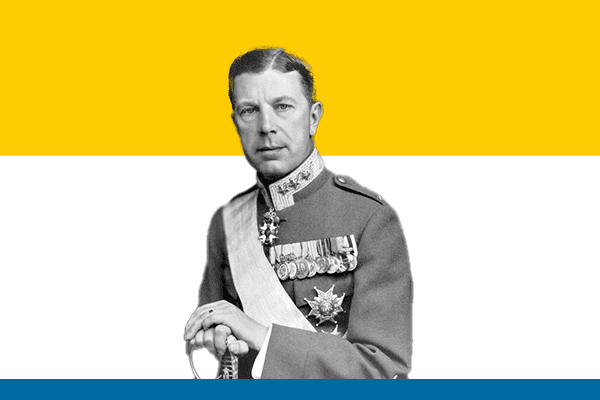
Early Life and Education
Gustaf VI Adolf was born on 11 November 1882 in Stockholm, Sweden. His parents raised him in a royal environment that emphasized duty, discipline, and education. He studied history, archaeology, and botany, subjects that deeply interested him throughout his life. He developed a passion for scientific exploration and became an expert in East Asian archaeology. His academic pursuits made him one of the most intellectually inclined monarchs in Europe.
Ascension to the Throne
Gustaf VI Adolf became king in 1950 after the death of his father, Gustaf V. By that time, Sweden had already moved toward a democratic system where the monarch held limited political power. Gustaf VI Adolf accepted this role and worked within the framework of constitutional monarchy. He focused on representing Sweden internationally and supporting national unity. His calm and thoughtful personality helped him gain the respect of both the public and political leaders.
Role as a Constitutional Monarch
During his reign, Gustaf VI Adolf embraced his role as a symbolic leader rather than a political authority. He performed ceremonial duties, attended state events, and represented Sweden abroad. He maintained neutrality in political matters, which strengthened democratic institutions. His reign marked a clear separation between monarchy and governance. This approach ensured that the monarchy remained relevant in a modern democratic society.
Personal Interests and Contributions
Gustaf VI Adolf actively pursued his interests in archaeology and science. He participated in archaeological excavations and collaborated with scholars worldwide. His work in Chinese archaeology earned him international recognition. He also showed a strong interest in gardening and botany, often spending time studying plants. His intellectual curiosity set him apart from many other monarchs and inspired respect beyond royal circles.
Legacy and Death
Gustaf VI Adolf died on 15 September 1973 at the age of 90. His grandson, Carl XVI Gustaf, succeeded him as king. Gustaf VI Adolf left behind a legacy of humility, wisdom, and service. He modernized the Swedish monarchy by aligning it with democratic values and public expectations. People remember him as a thoughtful and approachable ruler who valued knowledge and culture.
Conclusion
Gustaf VI Adolf played a crucial role in transforming the Swedish monarchy into a modern institution. He prioritized education, cultural engagement, and public service over political influence. His reign demonstrated that a monarch could remain relevant by adapting to changing times. His life continues to inspire respect and admiration in Sweden and beyond.