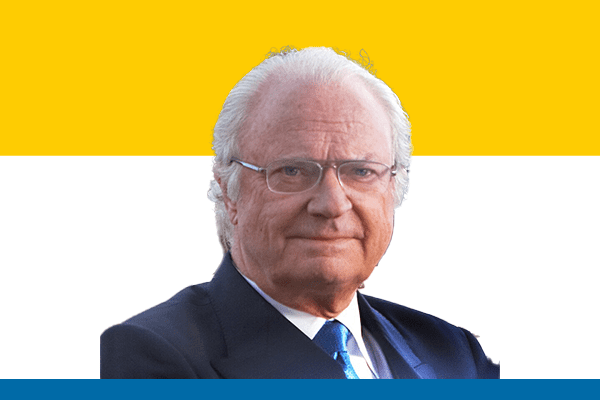
Carl XVI
Reign: 15 September 1973 – present
Home State: Haga Palace
Lifespan: born – 1946
Country: Sweden
Image credits available here.
Early Life and Background
Carl XVI Gustaf was born on April 30, 1946, at Haga Palace in Stockholm. His parents were Prince Gustaf Adolf and Princess Sibylla of Saxe-Coburg and Gotha. Tragedy struck early in his life when his father died in a plane crash in 1947, leaving Carl Gustaf as heir apparent at just one year old. Despite this loss, his family ensured he received a well-rounded education.
He studied at prestigious institutions and later pursued military training in the Swedish Army, Navy, and Air Force. He also studied political science, economics, and sociology, which prepared him for his future responsibilities as king.
Ascension to the Throne
In 1973, Carl XVI Gustaf became King of Sweden after the death of his grandfather, King Gustaf VI Adolf. At the young age of 27, he took on the responsibility of leading the monarchy. Sweden had already embraced a constitutional system, so the king did not hold political power. Instead, he acted as a symbolic figurehead who represented the nation.
The Swedish constitution was reformed in 1974, further limiting the monarch’s role. The king accepted these changes and adapted to his ceremonial duties, demonstrating his commitment to democracy and modern governance.
Role and Responsibilities
As king, Carl XVI Gustaf performs various ceremonial and diplomatic functions. He opens the Swedish Parliament annually, hosts state visits, and represents Sweden abroad. Through these activities, he strengthens Sweden’s international relationships.
He actively supports environmental issues, youth development, and scientific research. He founded initiatives like the World Scout Foundation, showing his dedication to young people and leadership development. Instead of remaining distant, the king engages with citizens and organizations, making his presence meaningful in modern society.
Personal Life
In 1976, Carl XVI Gustaf married Silvia Sommerlath, who became Queen Silvia of Sweden. Their marriage symbolized modernization within the monarchy, as Silvia was not of royal birth. Together, they have three children: Crown Princess Victoria, Prince Carl Philip, and Princess Madeleine.
Crown Princess Victoria is the heir to the throne, reflecting Sweden’s progressive stance on gender equality in succession laws. The royal family maintains a strong public presence and participates actively in national events.
Challenges and Modernization
Throughout his reign, Carl XVI Gustaf has faced criticism and challenges, including debates about the relevance of monarchy in a modern democracy. However, he has consistently worked to modernize the institution and maintain its relevance.
He emphasizes transparency, public engagement, and social responsibility. By adapting traditions to contemporary values, he ensures that the monarchy remains respected and connected to Swedish society.
Legacy and Significance
King Carl XVI Gustaf’s reign represents stability and continuity in Sweden. He has successfully balanced tradition with modernity, ensuring that the monarchy evolves alongside society. His long tenure highlights his dedication to serving the nation.
Rather than exercising political authority, he actively promotes unity, cultural heritage, and international cooperation. His contributions to environmental awareness and youth development further strengthen his legacy.
Conclusion
King Carl XVI Gustaf remains a respected and influential figure in Sweden. Through active engagement and adaptability, he has shaped a modern monarchy that aligns with democratic values. His leadership continues to inspire both citizens and global audiences.