ROMANIA
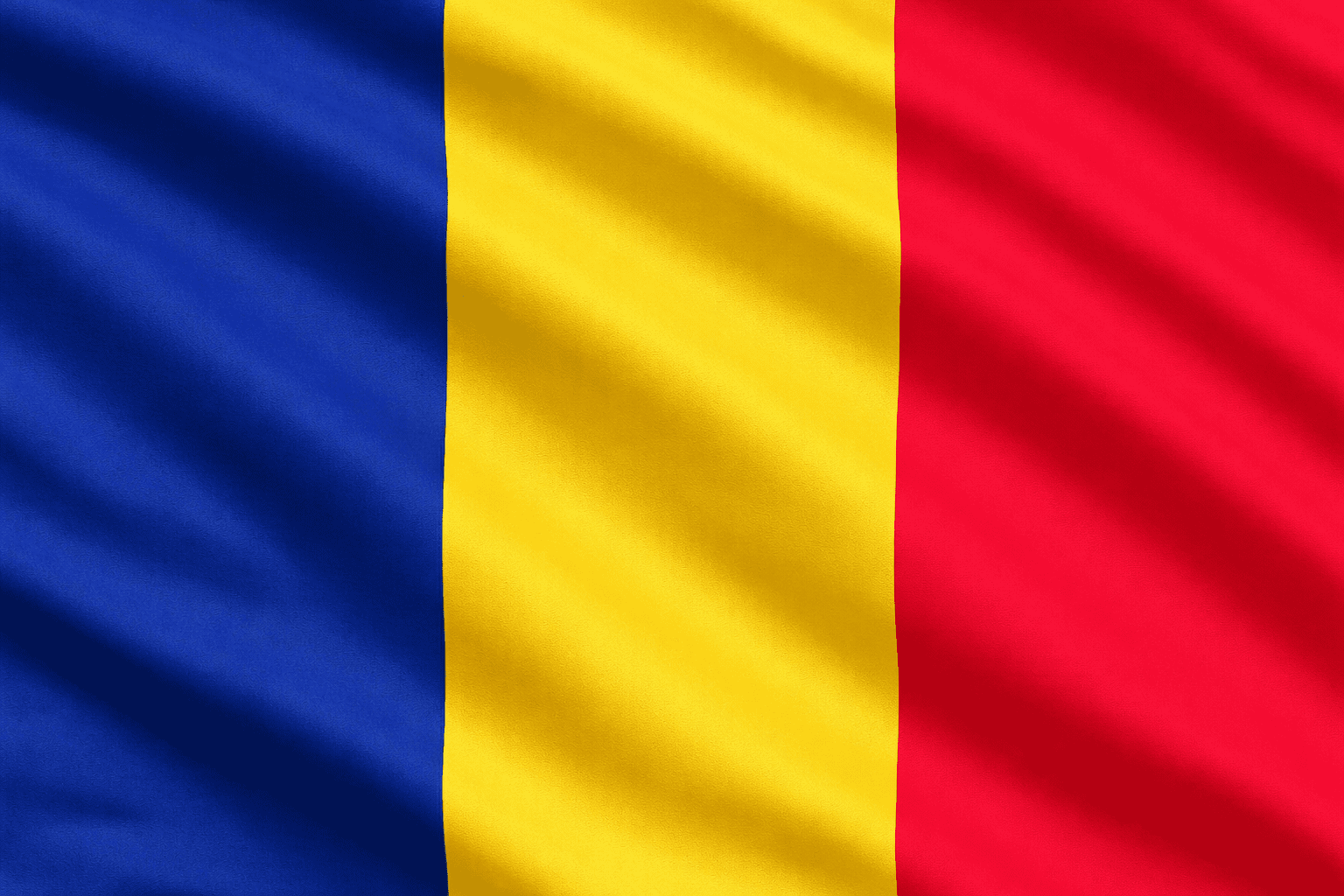
Romania flag
The Romania flag is a simple yet meaningful tricolor consisting of three vertical stripes: blue, yellow, and red. The blue stripe is placed on the hoist side, followed by yellow in the center and red on the outer edge. These colors have historical significance and represent liberty, justice, and fraternity. The design is similar to other European tricolors but reflects Romania’s national identity. The current form of the flag was officially adopted in 1989 after the fall of communist rule in the country.
Overview
Introduction
Romania is a beautiful and historically rich country located in southeastern Europe. It lies at the crossroads of Central, Eastern, and Southeastern Europe, sharing borders with countries like Hungary, Ukraine, Bulgaria, Serbia, and Moldova. Romania is known for its scenic landscapes, including the famous Carpathian Mountains, the vast Danube River, and the unique Danube Delta. Its capital city, Bucharest, serves as the political, economic, and cultural center of the country.
Geography and Climate
Romania has a diverse geography that includes mountains, hills, plains, and coastal regions along the Black Sea. The Carpathian Mountains form a natural arc through the center of the country, providing stunning scenery and rich biodiversity. The climate is generally temperate-continental, with cold winters and warm summers. This variation in climate supports a wide range of flora and fauna.
History
Romania has a long and complex history influenced by various civilizations. The region was once part of the ancient Roman Empire, which greatly influenced its language and culture. The name “Romania” itself reflects this Roman heritage. During the Middle Ages, the principalities of Wallachia, Moldavia, and Transylvania played important roles in regional politics. In the 20th century, Romania experienced monarchy, followed by a communist regime under Nicolae Ceaușescu. After the 1989 revolution, the country transitioned to democracy.
Culture and Society
Romanian culture is a blend of Latin, Slavic, and Balkan influences. The official language is Romanian, a Romance language similar to Italian and French. Traditional music, dance, and festivals remain important aspects of cultural life. Romania is also known for its folklore, including the legend of Dracula, inspired by Vlad the Impaler.
Economy
Romania has a developing economy with strong sectors in industry, agriculture, and services. It is one of the largest producers of agricultural products in Europe. In recent years, the country has seen growth in technology and IT industries. Romania became a member of the European Union in 2007, which has helped boost its economic development.
Conclusion
In conclusion, Romania is a country of remarkable natural beauty, rich history, and vibrant culture. From its mountainous landscapes to its historic cities and traditions, Romania offers a unique blend of old and new. Its continued growth and integration into European structures make it an important nation in the region.