SWEDEN
Sweden Flag
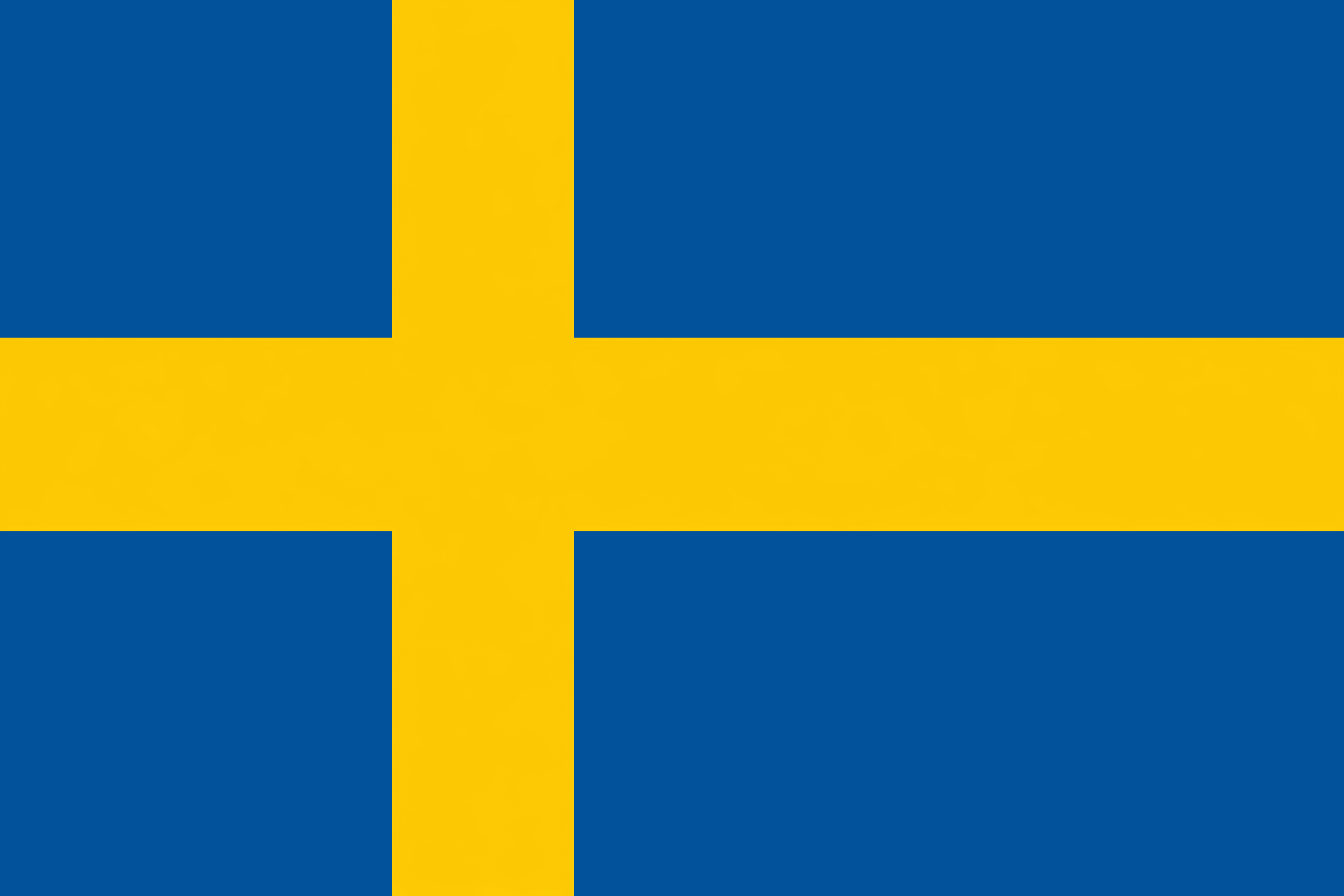
The Flag of Sweden features a blue field with a golden-yellow Nordic cross that extends to the edges. The cross represents Christianity and reflects the country’s historical ties to Scandinavian traditions. Blue and yellow come from Sweden’s national coat of arms. The design is simple yet distinctive, symbolizing unity, heritage, and identity. It is widely displayed on public buildings, during national celebrations, and on National Day of Sweden each year.
Sweden
Sweden is a Nordic country located in Northern Europe, known for its high quality of life, strong economy, and commitment to social welfare. It shares borders with Norway to the west and Finland to the east, while the Baltic Sea lies to its south and east. Sweden combines modern innovation with rich historical traditions, making it one of the most progressive nations in the world.
Geography and Climate
Sweden is the largest country in Scandinavia, featuring vast forests, thousands of lakes, and a long coastline. The northern part lies within the Arctic Circle, where winters are long and cold, while the southern regions experience milder climates. The country’s natural beauty includes mountains, rivers, and national parks that attract tourists from around the globe.
History and Development
Sweden has a long and influential history, dating back to the Viking Age when Norse seafarers explored and traded across Europe. During the 17th century, Sweden emerged as a major European power. However, it later adopted a policy of neutrality, avoiding direct involvement in major wars, including both World Wars.
Instead of focusing on military expansion, Sweden developed a stable political system and a strong economy. Over time, it transformed into a constitutional monarchy with a parliamentary democracy, ensuring that citizens actively participate in governance.
Government and Politics
Sweden operates under a constitutional monarchy, where the monarch serves as a ceremonial head of state while elected officials govern the country. The Prime Minister leads the government and makes key policy decisions. Sweden emphasizes transparency, equality, and democratic values in its political system.
Political parties actively engage with citizens, and elections are held regularly to ensure representation. This system allows Sweden to maintain stability and public trust in governance.
Economy and Innovation
Sweden has a highly developed and export-oriented economy. It is home to global companies such as IKEA and Volvo. The country excels in industries like technology, manufacturing, and renewable energy.
Rather than relying solely on traditional industries, Sweden actively invests in innovation and sustainability. It supports startups, research, and green technologies, making it a leader in environmental protection and digital advancement.
Culture and Society
Swedish culture values equality, simplicity, and sustainability. The concept of “lagom,” meaning balance and moderation, influences everyday life. Education and healthcare are publicly funded, ensuring access for all citizens.
Sweden promotes gender equality and social inclusion, often ranking among the top countries in global human development indices. Cultural traditions, music, and design also play an important role in shaping national identity.
Conclusion
Sweden stands as a model of modern governance, economic strength, and social welfare. Through active policies and progressive values, it continues to balance tradition with innovation. Its commitment to equality, sustainability, and global cooperation makes it one of the most respected nations in the world.