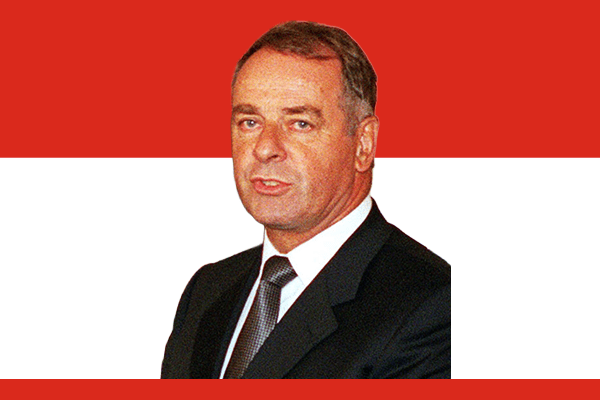
Mr. Adolf Ogi
In Office: 1 January 2000 – 31 December 2000
Political Party: Swiss People’s Party
Home State: Kandersteg
Lifespan: born 1942
Country: Switzerland
Image credits available here.
Switzerland’s Political System
Switzerland operates under a federal system with no single head of government like a prime minister. The Federal Council acts as the executive authority, and each of its seven members heads a government department. Every year, one member is chosen as President of the Swiss Confederation, but this role remains largely ceremonial.
This system emphasizes equality, cooperation, and shared responsibility. As a result, no single politician, including Adolf Ogi, holds dominant executive power over others.
Adolf Ogi’s Role in Government
Adolf Ogi served as a Federal Councillor for over a decade, representing the Swiss People’s Party. During his tenure, he led the Federal Department of Transport, Communications, and Energy. He actively contributed to modernizing Switzerland’s infrastructure and strengthening national transport systems.
He also served twice as President of Switzerland, in 1993 and 2000. During these terms, he chaired Federal Council meetings and represented Switzerland internationally. However, he did not function as a prime minister, nor did he supervise other leaders in a hierarchical structure.
Leadership Style and Contributions
Ogi became known for his energetic and approachable leadership style. He actively engaged with citizens and promoted Switzerland’s interests abroad. His focus on infrastructure development helped improve transportation networks and communication systems across the country.
He also emphasized international cooperation. After leaving the Federal Council, he worked with global organizations, including the United Nations, where he promoted peace and development initiatives.
Why Switzerland Has No Prime Minister
The absence of a prime minister in Switzerland reflects its commitment to direct democracy and collective governance. Power is distributed equally among Federal Council members to prevent concentration of authority. This system ensures stability and encourages consensus-based decision-making.
Adolf Ogi operated within this framework, collaborating with colleagues rather than leading them as a prime minister would in other countries.
Conclusion
Adolf Ogi played a significant role in Swiss politics, but he was never associated with prime ministers. Switzerland’s unique political structure replaces the concept of a prime minister with a collective executive body. Ogi’s contributions as a Federal Councillor and President highlight his importance in shaping modern Switzerland while respecting its democratic traditions.