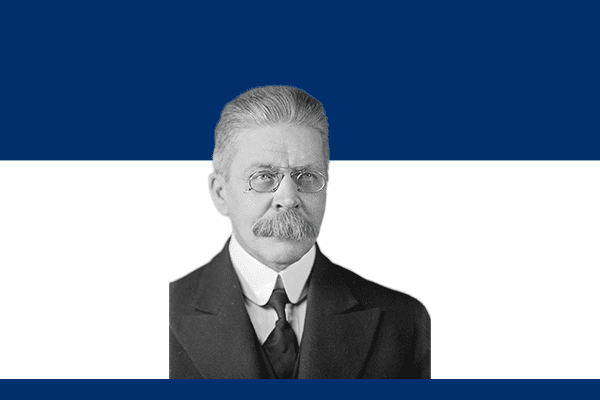
Mr. Aimo Cajander
In Office: 2 June 1922 – 31 May 1924
12 March 1937 – 1 December 1939
Political Party: Independent
Home State: Uusikaupunki
Lifespan: 1879–1943
Country: Finland
Image credits available here.
Early Life and Education
Aimo Kaarlo Cajander was born on April 4, 1879, in Hämeenlinna, Finland, which was then part of the Russian Empire. He showed a strong interest in nature and science from an early age. His curiosity about forests and the environment guided him toward academic studies in botany and forestry.
He studied at the University of Helsinki, where he focused on natural sciences. His dedication and intelligence helped him become one of Finland’s leading forestry experts. Instead of limiting himself to academic theory, Cajander actively conducted research and developed practical methods for forest management.
Career in Forestry and Science
Aimo Cajander built an impressive scientific career before entering politics. He became a professor of forestry and gained international respect for his research on forest ecology. He developed the “Cajander Theory,” which classified forest types based on vegetation and soil conditions. This method improved forest management and influenced forestry practices in many countries.
He also served as Director General of the Finnish Forest Service. In this position, he modernized forest administration and promoted sustainable use of Finland’s natural resources. His scientific achievements strengthened Finland’s forestry industry, which played an essential role in the country’s economy.
Entry into Politics
Cajander entered politics because he wanted to contribute to Finland’s national progress. He joined the National Progressive Party and quickly became a respected political figure. His calm personality, intellectual background, and practical thinking made him an effective leader.
He first served as Prime Minister of Finland in 1922. Although his first term lasted only a short time, he demonstrated strong leadership abilities. Later, he returned to office in 1924 and again in 1937. During his third term, Europe faced increasing political tension and the threat of war.
Leadership During Difficult Times
Aimo Cajander led Finland during a challenging period marked by economic uncertainty and growing international conflict. He focused on strengthening democracy and maintaining national unity. His government introduced reforms that improved education, social welfare, and economic stability.
During the late 1930s, tensions between Finland and the Soviet Union increased. Cajander attempted to preserve peace through diplomacy while preparing the nation for possible conflict. Although Finland faced military challenges during the Winter War, his leadership reflected determination and patriotism.
The phrase “Cajander’s Model” became associated with the Finnish army because many soldiers lacked proper military uniforms and equipment during the early stages of the conflict. Despite criticism, Cajander remained committed to supporting Finland’s independence and sovereignty.
Personal Life and Character
People respected Aimo Cajander for his intelligence, honesty, and dedication to public service. He balanced his scientific interests with political responsibilities and worked tirelessly for Finland’s development. Unlike many political leaders of his time, he maintained a modest and scholarly lifestyle.
He valued education, research, and environmental conservation. His ability to combine scientific knowledge with practical governance distinguished him from other politicians.
Legacy and Contributions
Aimo Cajander left a powerful legacy in both science and politics. His forestry research transformed environmental studies and sustainable forest management. His political leadership helped Finland navigate difficult years of economic and political uncertainty.
Today, historians remember him as a visionary leader who promoted knowledge, responsibility, and national progress. His contributions to forestry continue to influence researchers and environmental experts around the world.
Conclusion
Aimo Cajander played a vital role in shaping modern Finland through his achievements in science and politics. He served his country with dedication, intelligence, and integrity. By promoting sustainable forestry and democratic governance, he created a lasting impact on Finnish society. His life remains an inspiring example of leadership and public service.