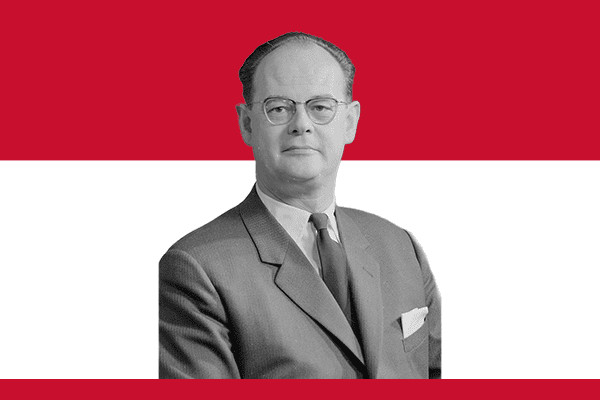
Mr. Viggo Kampmann
In Office: 21 February 1960 – 3 September 1962
Political Party: Social Democrats
Home State: Frederiksberg
Lifespan: 1910–1976
Country: Denmark
Image credits available here.
Early Life and Education
Viggo Kampmann was born on July 21, 1910, in Frederiksberg, Denmark. He grew up in a middle-class family that valued education and public service. From a young age, he showed strong interest in economics and politics. He studied economics at the University of Copenhagen, where he developed analytical skills and gained deep knowledge of financial systems.
After completing his education, Kampmann worked as an economist and statistician. His expertise in economic planning earned him recognition within political circles. He joined the Social Democratic Party and quickly became an important figure because of his understanding of economic reforms and public welfare.
Political Career
Viggo Kampmann entered Danish politics during a period of social and economic change. He served in several government positions before becoming Prime Minister. As Finance Minister, he introduced policies that strengthened Denmark’s economy and expanded welfare programs. He focused on improving employment opportunities, public services, and social security.
In 1960, Kampmann became the Prime Minister of Denmark after succeeding H. C. Hansen. As Prime Minister, he actively promoted economic growth and social equality. He believed that the government should support citizens through education, healthcare, and welfare programs. His leadership reflected the principles of the Social Democratic movement, which aimed to create a fair and balanced society.
Leadership and Reforms
During his time as Prime Minister, Kampmann introduced important economic and social reforms. He worked to modernize Denmark’s economy and encouraged cooperation between industries, workers, and government institutions. Instead of relying only on traditional methods, he adopted innovative approaches to economic management.
Kampmann supported progressive taxation and public welfare programs to reduce social inequality. He also encouraged international cooperation and strengthened Denmark’s relationships with other European nations. His policies helped Denmark maintain economic stability during a period of rapid development.
In addition to economic reforms, Kampmann promoted education and healthcare improvements. He understood that strong public institutions could improve citizens’ quality of life. Through active policymaking, he contributed to the growth of Denmark’s welfare state.
Personal Struggles and Resignation
Despite his political success, Viggo Kampmann faced personal challenges. He struggled with health issues and alcoholism, which affected his ability to manage the pressures of political leadership. Although he remained committed to his duties, these problems gradually weakened his position.
In 1962, Kampmann resigned as Prime Minister due to his declining health. Jens Otto Krag succeeded him as Denmark’s leader. After leaving office, Kampmann stayed away from active politics and focused on his personal life.
Legacy and Importance
Viggo Kampmann remains an important figure in Danish political history. His economic policies and welfare reforms influenced the development of modern Denmark. He demonstrated how effective leadership and economic planning could strengthen society and improve living standards.
Historians and political experts often recognize Kampmann for his intelligence and vision. Although his time as Prime Minister was brief, his contributions shaped Denmark’s social and economic structure for future generations.
His dedication to public welfare, equality, and economic stability continues to inspire political leaders today. Kampmann’s work helped establish Denmark as one of the world’s most socially progressive countries.
Conclusion
Viggo Kampmann played a significant role in Denmark’s political and economic development during the twentieth century. Through active leadership and reform-oriented policies, he strengthened the Danish welfare system and promoted social equality. Despite personal struggles, he left behind a legacy of progress, modernization, and public service that continues to influence Denmark today.