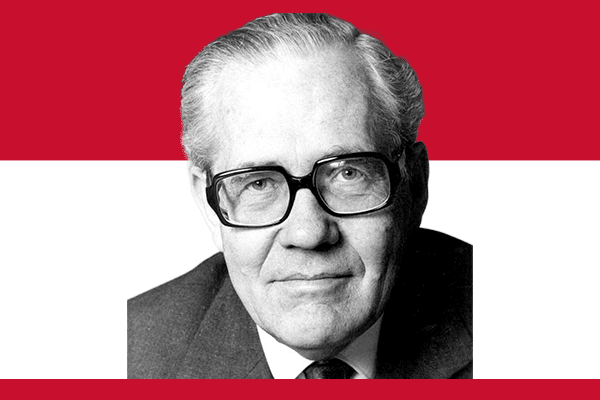
Mr. Poul Hartling
In Office: 19 December 1973 – 13 February 1975
Political Party: Venstre
Home State: Copenhagen
Lifespan: 1914–2000
Country: Denmark
Image credits available here.
Early Life and Education
Poul Hartling was born on August 14, 1914, in Copenhagen, Denmark. He grew up in a family that valued education and public service. From an early age, he developed an interest in social issues and politics. He attended the University of Copenhagen, where he studied theology and later worked as a pastor.
His background in religion shaped his compassionate personality and strengthened his sense of responsibility toward society. Rather than limiting himself to religious duties, Hartling entered politics to create positive social and economic reforms in Denmark.
Political Career
Poul Hartling joined the Liberal Party of Denmark, also known as Venstre. He quickly earned respect because of his intelligence, honesty, and leadership skills. During the 1960s, he became one of the leading figures in Danish politics.
In 1965, Hartling became the leader of the Venstre party. Under his leadership, the party expanded its influence and gained support from many Danish citizens. He focused on economic growth, social welfare, and democratic values. Instead of creating division, he encouraged cooperation among political groups.
Prime Minister of Denmark
In 1973, Poul Hartling became the Prime Minister of Denmark after a dramatic parliamentary election. His government faced serious economic challenges, including inflation and unemployment. Despite these difficulties, Hartling worked actively to stabilize the Danish economy and improve public confidence.
He promoted responsible financial policies and encouraged economic reforms. Although his party did not hold a majority in parliament, he managed the government with determination and diplomatic skill. He communicated openly with political opponents and sought practical solutions to national problems.
Hartling’s government lasted until 1975. Even though his time as prime minister was relatively short, many people admired his calm leadership and commitment to democracy.
Humanitarian Work and UNHCR Leadership
After leaving Danish politics, Poul Hartling focused on international humanitarian work. In 1978, he became the United Nations High Commissioner for Refugees. During his leadership, millions of refugees around the world faced war, poverty, and political conflict.
Hartling worked tirelessly to improve refugee protection and humanitarian assistance. He visited refugee camps, met world leaders, and encouraged international cooperation. Rather than ignoring global crises, he raised awareness about the suffering of displaced people.
Under his guidance, the UNHCR expanded its relief programs and strengthened support for refugees in Asia, Africa, and other regions. In 1981, the UNHCR received the Nobel Peace Prize for its humanitarian efforts during his leadership. This recognition highlighted Hartling’s dedication to peace and human rights.
Personal Qualities and Leadership Style
Poul Hartling earned respect for his honesty, humility, and strong moral values. He believed in dialogue, cooperation, and peaceful problem-solving. His calm and thoughtful personality helped him succeed in both national and international leadership roles.
Unlike many politicians who focused only on power, Hartling concentrated on serving people and improving society. He inspired trust among citizens and colleagues because he remained sincere and responsible throughout his career.
Legacy and Importance
Poul Hartling left a lasting impact on Denmark and the international community. As Prime Minister, he guided Denmark during a difficult economic period. As UN High Commissioner for Refugees, he defended vulnerable people and promoted humanitarian values worldwide.
His contributions continue to inspire political leaders, diplomats, and humanitarian workers. Denmark remembers him as a principled statesman, while the world recognizes him as a compassionate defender of refugees and human rights.
Conclusion
Poul Hartling dedicated his life to public service, democracy, and humanitarian work. Through active leadership and compassionate action, he influenced both Danish politics and global refugee protection. His legacy remains an example of integrity, responsibility, and service to humanity.