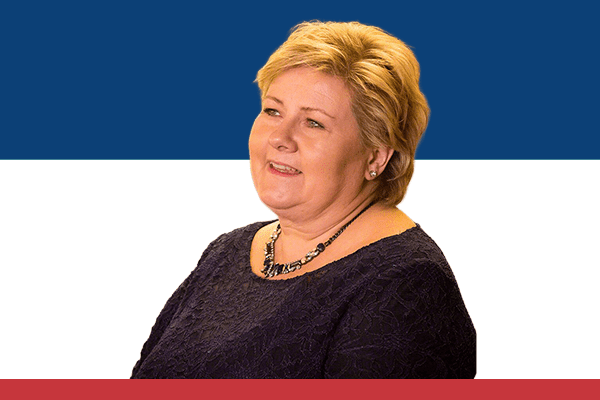
Early Life and Education
Erna Solberg was born on February 24, 1961, in Bergen, Norway. She grew up in a middle-class family that encouraged education and social responsibility. From a young age, she showed interest in politics and public affairs. She actively participated in discussions about society and governance during her school years.
She attended the University of Bergen, where she studied sociology, political science, statistics, and economics. Her academic background strengthened her understanding of social systems and public administration. Instead of limiting herself to academics, she also joined political organizations and developed leadership skills that later shaped her political career.
Beginning of Political Career
Erna Solberg began her political journey with the Conservative Party of Norway. She quickly gained recognition for her intelligence, confidence, and communication skills. In 1989, she won election to the Norwegian Parliament, known as the Storting. Through hard work and dedication, she built a reputation as a capable and reliable politician.
She served in various parliamentary committees and focused on issues such as local government, welfare policies, and immigration. Between 2001 and 2005, she worked as the Minister of Local Government and Regional Development. In this role, she introduced reforms to improve public administration and strengthen local governance.
Leadership as Prime Minister
In 2013, Erna Solberg became the Prime Minister of Norway after leading the Conservative Party to electoral victory. She formed a center-right coalition government and focused on creating economic opportunities and improving public services.
During her leadership, Norway experienced steady economic growth and low unemployment rates. Solberg encouraged innovation, business development, and investments in technology. She also emphasized the importance of education and introduced reforms to improve learning outcomes in schools.
Her government prioritized healthcare modernization and infrastructure development. She supported projects that improved transportation networks and digital services across Norway. Through active policymaking, she aimed to make Norway more competitive in the global economy.
International Role and Crisis Management
Erna Solberg earned international respect for her diplomatic skills and commitment to global cooperation. She supported environmental protection, climate action, and human rights initiatives. Norway actively participated in international peace efforts and humanitarian programs during her tenure.
One of her greatest leadership challenges came during the COVID-19 pandemic. Solberg acted quickly to protect public health and stabilize the economy. Her government implemented safety measures, supported businesses, and provided financial assistance to citizens. She communicated regularly with the public and encouraged unity during the crisis.
Her calm and organized approach during the pandemic increased public trust in her leadership. Many international observers praised Norway’s effective response under her guidance.
Personal Life and Leadership Style
Erna Solberg is known for her approachable personality and practical leadership style. She balances firmness with empathy and often emphasizes cooperation in politics. Despite facing political criticism at times, she consistently focused on finding solutions rather than creating conflicts.
She is married to Sindre Finnes, and together they have two children. Outside politics, she enjoys reading, traveling, and spending time with her family.
Legacy and Influence
Erna Solberg remains one of Norway’s most respected political leaders. Her years as prime minister strengthened Norway’s economic position and international reputation. She modernized public policies while maintaining social welfare and democratic values.
Her leadership inspired many women to participate in politics and public service. Through determination, intelligence, and active governance, she demonstrated how effective leadership can positively shape a nation.
Conclusion
Erna Solberg played a major role in shaping modern Norway through active leadership and practical reforms. From her early political career to her time as prime minister, she consistently worked to improve society and strengthen international cooperation. Her legacy continues to influence Norwegian politics and inspire future leaders.