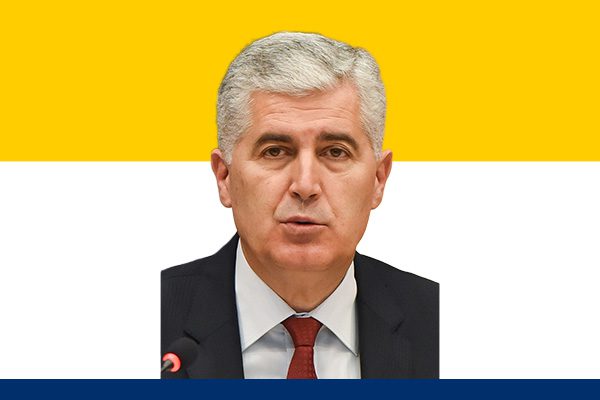
Mr. Dragan Covic
In Office: 17 November 2014 – 20 November 2018
Political Party: Croatian Democratic
Home State: Mostar
Lifespan: born 1956
Country: Bosnia and Herzegovina
Image credits available here.
Early Life and Education
Dragan Čović was born on 20 August 1956 in Mostar, Bosnia and Herzegovina, which was then part of the former Yugoslavia. He completed his early education in Mostar before pursuing higher studies in engineering. He graduated from the Faculty of Mechanical Engineering at the University of Mostar. Before entering politics, he built a successful professional career in engineering and business management. He worked in industrial enterprises and gained valuable experience in administration and leadership.
Entry into Politics
Dragan Čović entered politics during the 1990s, a period marked by major political and social changes in the Balkans. He joined the Croatian Democratic Union of Bosnia and Herzegovina (HDZ BiH) and quickly became one of its leading figures. His organizational skills and leadership abilities helped him rise through the party ranks. Eventually, he became the party’s president, strengthening its influence among Bosnian Croats.
Political Career
Dragan Čović has served in several important political positions. He became the Croat member of the Presidency of Bosnia and Herzegovina and later served as its Chair on different occasions under the country’s rotating presidency system. During his tenure, he promoted constitutional reforms, equal representation for all three constituent peoples, and stronger cooperation with neighboring countries and European institutions.
As the leader of HDZ BiH, he has consistently advocated for the political rights of Bosnian Croats. He has also participated in negotiations aimed at improving the country’s electoral system and strengthening democratic institutions.
Leadership and Policies
Throughout his political career, Dragan Čović has emphasized dialogue, political stability, and European integration. He has supported Bosnia and Herzegovina‘s efforts to join the European Union and strengthen relations with NATO. He has frequently highlighted the importance of constitutional reforms to ensure equal representation for Bosniaks, Croats, and Serbs.
His leadership has focused on economic development, infrastructure improvement, institutional reforms, and regional cooperation. He has encouraged political negotiations as a means of resolving disputes and achieving long-term stability.
Challenges and Controversies
Like many influential political leaders, Dragan Čović has faced criticism and legal challenges during his career. Political opponents have questioned some of his policies and leadership decisions. Legal proceedings involving him attracted public attention, although later court decisions changed the outcomes of several earlier rulings. Despite these controversies, he has remained one of the most influential Croat political leaders in Bosnia and Herzegovina.
Legacy
Dragan Čović has left a lasting impact on the political landscape of Bosnia and Herzegovina. His long tenure in public office demonstrates his influence on national politics and the representation of the Croat community. Supporters credit him with defending Croat political interests and promoting European integration, while critics continue to debate his political approach and reform agenda.
Conclusion
Dragan Čović remains one of the most recognizable political figures in Bosnia and Herzegovina. His career reflects decades of involvement in governance, constitutional discussions, and regional diplomacy. Through his leadership in HDZ BiH and his service in national institutions, he has played an important role in shaping the country’s political development. His contributions, achievements, and controversies continue to make him a significant figure in the history and politics of Bosnia and Herzegovina.