Dr. Manmohan Singh
In Office: 22 May 2004 – 26 May 2014
Political Party: Indian National Congress
Home State: Punjab
Lifespan: 1932–2024
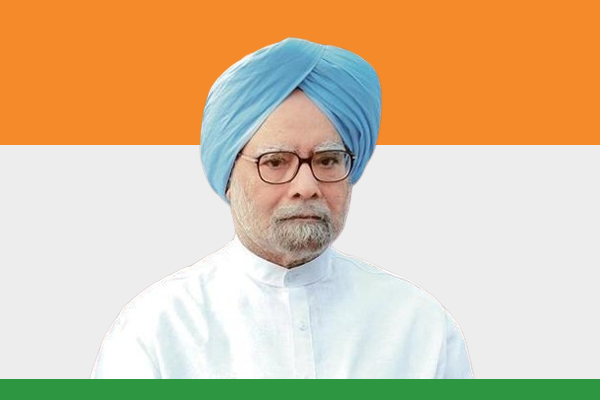
Early Life and Education
Dr. Manmohan Singh was born on September 26, 1932, in Gah, a village in present-day Pakistan. After the Partition in 1947, his family moved to Amritsar, Punjab. A brilliant student, Singh studied economics at Panjab University, followed by further studies at Cambridge University and a doctorate from Oxford University. His academic excellence laid the foundation for his remarkable career as an economist and policymaker.
Academic and Bureaucratic Career
Before entering active politics, Dr. Singh had a distinguished career as an academic and bureaucrat. He served in several key positions, including Governor of the Reserve Bank of India, Deputy Chairman of the Planning Commission, and Economic Advisor to the Prime Minister. He also worked with international organizations like the International Monetary Fund (IMF) and the United Nations, gaining wide global recognition for his economic expertise.
Economic Reforms of 1991
Dr. Singh’s most significant contribution came in 1991, when India faced a severe economic crisis. As Finance Minister in Prime Minister P. V. Narasimha Rao’s government, he introduced bold economic reforms. These included liberalization, privatization, and globalization of the Indian economy. He opened up markets, removed trade barriers, and encouraged foreign investment. These measures marked a turning point in India’s economic history, transforming it into one of the world’s fastest-growing economies.
Prime Minister of India
Dr. Manmohan Singh became the 13th Prime Minister of India in 2004, leading the United Progressive Alliance (UPA). He served two consecutive terms (2004–2014), becoming the first Sikh and the first economist to hold the post. His tenure was marked by rapid economic growth and several key social reforms.
He launched important initiatives such as the National Rural Employment Guarantee Act (NREGA) ,Right to Information (RTI) Act, and expanded healthcare and education programs. Internationally, he strengthened India’s global presence, most notably through the India–U.S. Civil Nuclear Deal, enhancing strategic and energy cooperation.
Leadership Style and Legacy
Dr. Singh was known for his humility, integrity, and intellectual depth. Unlike many politicians, he was soft-spoken and avoided public confrontations. Though sometimes criticized for being too silent during political controversies, he maintained a clean image throughout his career. His leadership helped stabilize India’s economy and lay the groundwork for long-term development.
Conclusion
Dr. Manmohan Singh’s legacy is that of a visionary economist and a principled leader. His bold reforms in 1991 and his steady governance as Prime Minister significantly shaped modern India. He remains an inspiration for his dedication, wisdom, and service to the nation. In the history of independent India, his name stands tall among the architects of its economic and democratic growth.