Mr. Huseyn Shaheed Suhrawardy
In Office: 12 September 1956 – 17 October 1957
Political Party: Awami Leage
Home State: Midnapore Bengal
Lifespan: 1892–1963
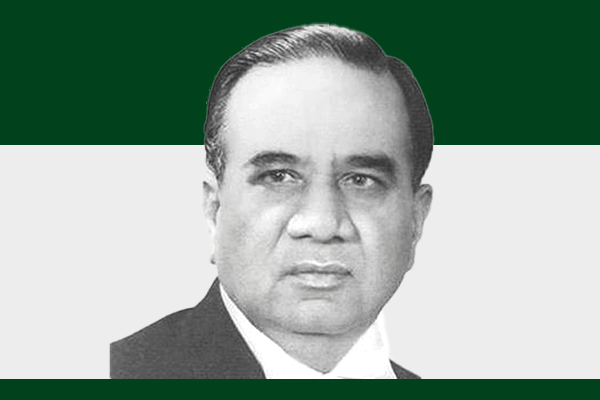
Early Life and Education
Huseyn Shaheed Suhrawardy was a prominent political leader, lawyer, and statesman who played a vital role in both British India and early Pakistan. He was born on September 8, 1892, in Midnapore, Bengal (now in West Bengal, India), into a well-educated and influential Muslim family. His father, Sir Zahid Suhrawardy, was a judge of the Calcutta High Court. Suhrawardy received his early education at St. Xavier’s College in Calcutta and later studied at Oxford University in England. He was called to the Bar at Gray’s Inn, London, and began his legal career upon returning to India.
Political Career in British India
Suhrawardy joined politics through the Swaraj Party but later became a key member of the All-India Muslim League. He became deeply involved in the politics of Bengal and served as the Mayor of Calcutta and later as a member of the Bengal Legislative Assembly. His most prominent role during British India came when he became the Premier (Chief Minister) of Bengal in 1946. During his tenure, he supported the idea of a united Bengal, separate from both India and Pakistan, though this plan did not materialize due to opposition from the Indian National Congress and Muslim League leaders.
One of the darkest moments of his political career was the Calcutta Riots of 1946, also known as Direct Action Day. As Chief Minister, Suhrawardy was criticized for failing to prevent the communal violence, though he denied direct involvement. Despite the controversy, he remained a key political figure.
Role in Pakistan’s Politics
After the creation of Pakistan in 1947, Suhrawardy settled in East Pakistan (now Bangladesh). He quickly emerged as a leading voice for the rights of East Pakistanis. He co-founded the Awami League in 1949, a political party that would later play a major role in Pakistan’s and Bangladesh’s political history. Suhrawardy advocated for democracy, provincial autonomy, and the recognition of Bengali as one of the national languages.
In 1956, he became the fifth Prime Minister of Pakistan. His government was formed through a coalition and aimed to bridge the political and economic disparities between East and West Pakistan. He promoted foreign relations with the United States and supported Pakistan’s membership in Western alliances like SEATO and CENTO.
Challenges and Resignation
Suhrawardy’s tenure as Prime Minister was short-lived, lasting just over a year. His efforts to assert civilian control over the military and his disagreements with President Iskander Mirza led to political instability. In 1957, he was pressured to resign. Following his resignation, he faced political isolation during the martial law period imposed by Ayub Khan in 1958.
Legacy and Death
Huseyn Shaheed Suhrawardy died in Beirut, Lebanon, on December 5, 1963, under mysterious circumstances, with some suspecting foul play. He is remembered as a champion of democracy and Bengali rights and one of the key political architects of modern Pakistan and Bangladesh.
His legacy lives on through institutions named after him, such as Suhrawardy Medical College and Suhrawardy Udyan in Dhaka. He is honored as a visionary leader who worked for constitutional rule, federalism, and equal representation for East Pakistan.