Mr. Ibrahim Ismail Chundrigar
In Office: 17 October 1957 – 11 December 1957
Political Party: Muslim Leage
Home State: Mumbai
Lifespan: 15 September 1897 – 26 September 1960
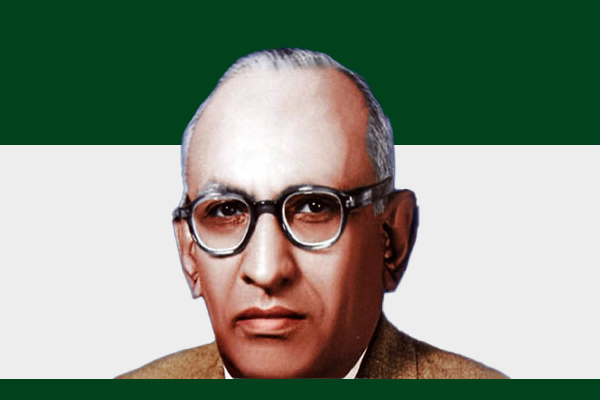
Early Life and Education
Born on September 15, 1897, in Ahmedabad, Gujarat (then part of British India), Ibrahim Ismail Chundrigar came from a well-educated and respected Muslim merchant family. From a young age, he demonstrated intellectual brilliance and an interest in public service. He completed his early education in Ahmedabad and pursued law at the University of Bombay (now Mumbai), becoming a barrister at Lincoln’s Inn, London.
Legal and Political Career in British India
Chundrigar launched his legal career as a prominent advocate at the Bombay High Court. However, his passion for justice and civil rights soon drew him into politics. He joined the All-India Muslim League, where he actively campaigned for Muslim political rights and became a strong supporter of Muhammad Ali Jinnah’s vision of a separate Muslim homeland.
In 1946, he was elected to the Central Legislative Assembly and played a crucial role in the constitutional debates leading up to partition. He was among the leading voices advocating for the protection of minorities and equitable governance.
Role in the Creation of Pakistan
When Pakistan was created in 1947, Chundrigar migrated to the new nation and was swiftly appointed as the Minister of Commerce, Industry, and Law in Liaquat Ali Khan’s cabinet. He was instrumental in shaping Pakistan’s early legal framework, working on economic policy, trade negotiations, and industrial development. He also briefly served as Pakistan’s Ambassador to Afghanistan, representing the country during a period of complex regional diplomacy.
Prime Minister of Pakistan (October 17 – December 11, 1957)
Chundrigar became the Prime Minister of Pakistan on October 17, 1957, succeeding Feroz Khan Noon. His appointment came during a time of political instability, and he led a fragile coalition government.During his short tenure, Chundrigar:Advocated for provincial autonomy and parliamentary supremacy.Opposed centralization of power and supported the rights of smaller provinces.Took principled stands on constitutional matters, which ultimately led to the collapse of his government.Due to political conflicts and lack of parliamentary support, he resigned on December 11, 1957, making his term the second shortest of any Pakistani Prime Minister.
Legacy and Contributions
Despite a brief time as Prime Minister, Ibrahim Ismail Chundrigar left a significant legacy:He championed democracy and minority rights.He made important contributions to Pakistan’s legal and commercial policies.He upheld Jinnah’s constitutionalist vision, even under political pressure.The famous I. I. Chundrigar Road in Karachi, Pakistan’s financial hub, is named in his honor—symbolizing his enduring association with law, governance, and economic affairs., a respected legal mind, and a champion of democratic ideals.