Nur Muhammad Taraki
In Office: 1 May 1978 – 27 March 1979
Political Party: People’s Democratic Party
Home State: Nawa
Lifespan: 1917–1979
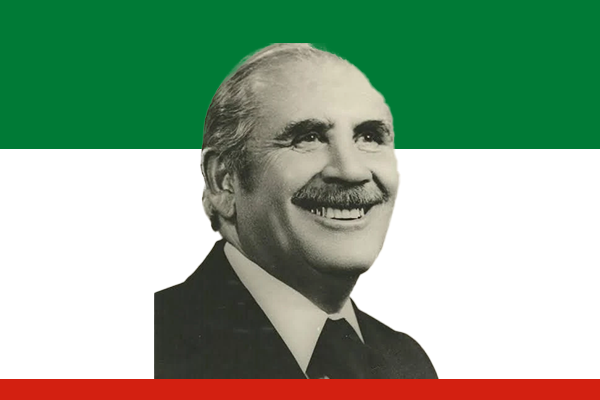
Early Life and Background
Nur Muhammad Taraki was born on July 15, 1917, in the village of Nawa in Ghazni Province, Afghanistan. He came from a humble Pashtun farming family and moved to Kabul in search of better opportunities. Taraki worked in various low-paying jobs, including as a clerk and translator, before developing an interest in literature and politics. He became known for writing short stories and political articles that emphasized themes of class struggle, social justice, and anti-elitism—early indications of his Marxist leanings.
Political Awakening and the PDPA
By the 1950s, Taraki had embraced Marxism-Leninism. In 1965, he co-founded the People’s Democratic Party of Afghanistan (PDPA) and became its first General Secretary. The PDPA sought to radically transform Afghan society through socialist reform, land redistribution, women’s empowerment, and modernization. However, ideological disagreements soon split the party into two factions: Khalq (Masses), led by Taraki and Hafizullah Amin, and Parcham (Banner), led by Babrak Karmal. Despite internal friction, the PDPA grew in influence among Afghan leftists and gained the quiet backing of the Soviet Union.
The Saur Revolution and Seizure of Power
On April 27, 1978, the PDPA, backed by military allies, launched the Saur Revolution, overthrowing President Mohammad Daoud Khan in a coup. Taraki emerged as the head of state, assuming the titles of President of the Revolutionary Council, Prime Minister, and General Secretary of the PDPA, giving him near-total control of the new communist government.
Once in power, Taraki launched an aggressive program of reforms, including land redistribution, the abolition of feudal practices, promotion of women’s rights, and mass literacy campaigns. Though ideologically aligned with the Soviet model, these reforms were often rushed and poorly executed, sparking violent backlash from conservative and tribal segments of Afghan society.
Repression and Rebellion
Taraki’s government ruled with an iron fist, arresting and executing thousands of political opponents, religious leaders, and suspected dissidents. His secular and socialist policies alienated the rural population, who saw them as an attack on Islam and traditional culture. By late 1978, armed uprisings began to erupt across the country, marking the beginning of a nationwide resistance that would evolve into the mujahideen movement.
Power Struggles and Assassination
Internal divisions within the PDPA reached a climax in 1979, when Taraki’s former ally, Hafizullah Amin, began to overshadow him. A failed attempt by Taraki to remove Amin with Soviet support led to his downfall. InSeptember 1979, Amin deposed Taraki and soon had him killed, reportedly suffocated on Amin’s orders.
Legacy
Nur Muhammad Taraki is remembered as the founding figure of communist rule in Afghanistan. While his vision was driven by ideals of social equality and reform, his authoritarian methods, failure to respect traditional structures, and heavy reliance on force led to widespread unrest. His policies and brutal tactics helped ignite a chain of events that resulted in the Soviet invasion in 1979 and decades of civil war. Taraki’s legacy remains one of radical ambition met with tragic consequences.