Mr. Zhou Enlai
In Office: 1 October 1949 – 8 January 1976
Political Party: United National Party
Home State: Jiangsu
Lifespan: 1898–1976
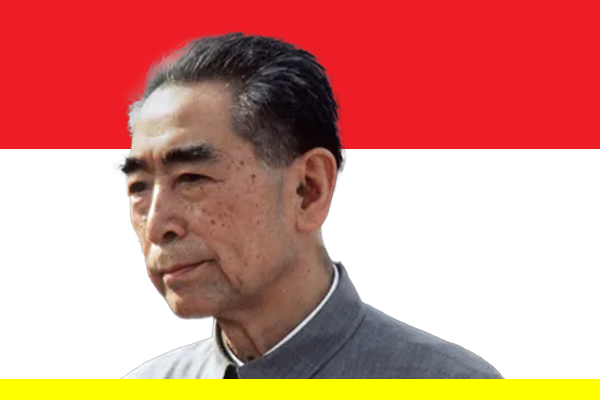
Early Life and Education
Zhou Enlai (周恩来) was born on March 5, 1898, in Huai’an, Jiangsu Province, China, into a scholarly and moderately well-off family. From a young age, he was known for his intellect and discipline. He received a traditional Confucian education and later studied in Japan. In 1920, Zhou traveled to France as part of the “Work-Study Movement,” where many young Chinese students worked and studied abroad. While in Europe, he became involved in revolutionary politics and joined the Chinese Communist Party (CCP) in the early 1920s.
Revolutionary Activities and Rise in the CCP
Zhou returned to China in the 1920s and quickly rose within the ranks of the CCP. He helped organize labor strikes and student protests and became known as a skilled organizer and negotiator. He played a leading role during the United Front periods—alliances between the CCP and the Kuomintang (KMT) to fight warlords and resist Japanese aggression.
During the Long March (1934–1935), Zhou was instrumental in maintaining discipline and unity among the retreating Communist forces. He also supported Mao Zedong‘s leadership during this critical time, helping Mao consolidate his power within the party.
Premier of the People’s Republic of China
With the founding of the People’s Republic of China in 1949, Zhou was appointed its first Premier, a position he held until his death in 1976. He also served as Foreign Minister from 1949 to 1958. As Premier, Zhou was responsible for managing the day-to-day functions of the new government and oversaw China’s first Five-Year Plan, helping to rebuild the country after decades of war.
Known for his meticulous planning, diplomatic skills, and calm demeanor, Zhou earned the respect of both colleagues and foreign leaders. He helped stabilize China in the early years of Communist rule and was widely seen as a voice of reason within the party.
Role in Foreign Affairs
Zhou was China’s primary diplomat during the 1950s and 1960s. He represented China at the 1954 Geneva Conference, where he skillfully negotiated with Western powers, and at the 1955 Bandung Conference, where he promoted peaceful coexistence and solidarity among non-aligned nations.
His diplomatic efforts helped China gain international recognition and laid the groundwork for future engagement with the West.
Surviving Political Turmoil
Zhou navigated the dangerous political landscape of Mao’s China, including the Great Leap Forwar and the Cultural Revolution. While maintaining loyalty to Mao, he often acted behind the scenes to protect persecuted officials and intellectuals. His steady leadership offered a degree of stability during these turbulent times.
Death and Legacy
Zhou Enlai died of cancer on January 8, 1976. His death triggered widespread public mourning. Later that year, the Tiananmen Incident—a spontaneous outpouring of grief and frustration—highlighted his popularity and the people’s discontent with political extremism.
Zhou is remembered as one of the most competent, respected, and principled leaders of the Communist era. His legacy endures as a symbol of moderation, diplomacy, and selfless service to the Chinese people.