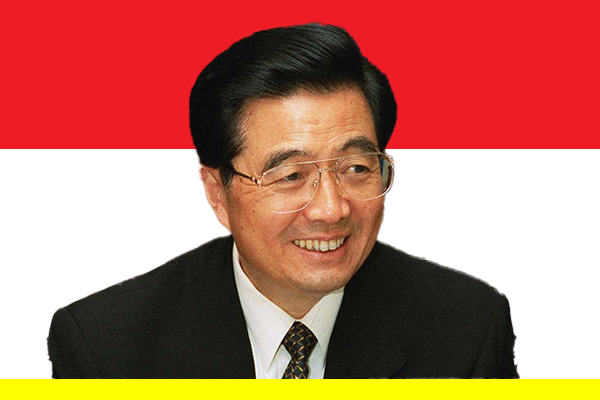
Mr. Hu Jintao
Name: Mr. Hu Jintao
In Office – Term 1: 16/03/2003- 16/03/2008
Term 2: 16/03/2008- 15/03/2013
Political Party: Community Party of China
Home State: Jiangsu, China
Lifespan: Born 21 December 1942
Early Life and Education
Hu Jintao was born on December 21, 1942, in Taizhou, Jiangsu province, China. He excelled academically and attended Tsinghua University in Beijing, where he studied hydraulic engineering. A top student and member of the Chinese Communist Party (CCP) from 1964, Hu began his career in engineering before transitioning into political roles, demonstrating technical skill and political discipline.
Political Ascent and Regional Leadership
Hu’s rise through the CCP was methodical and low-profile. He held key positions in underdeveloped regions, including Gansu and Guizhou provinces, and later served as Party Secretary in Tibet. His leadership in Tibet during periods of unrest won him praise from the party leadership for maintaining stability. In 1992, Hu was elevated to the Politburo Standing Committee, the CCP’s top decision-making body. He later became Vice President in 1998 and Vice Chairman of the Central Military Commission in 1999, marking him as the successor to Jiang Zemin.
Becoming China’s Top Leader
Hu Jintao assumed office as General Secretary of the CCP in 2002 and became President of China in 2003. In 2004, he also took over as Chairman of the Central Military Commission, completing his control over the party, state, and military. Hu served as China’s top leader for two terms until 2012, overseeing a decade of rapid development and relative political stability.
Scientific Development and Harmonious Society
Hu introduced key ideological concepts such as the “Scientific Outlook on Development” and the idea of building a “Harmonious Socialist Society.” These policies focused on sustainable development, reducing inequality, promoting social justice, and addressing environmental concerns. Under his administration, China became the world’s second-largest economy and improved infrastructure and living standards, especially in rural areas.
Foreign Policy and Global Integration
Under Hu’s leadership, China adopted a “peaceful rise” strategy in international affairs. His government aimed to expand China’s global role while reassuring other nations of its non-aggressive intentions. Milestones included China’s participation in multilateral organizations, its increased investment in Africa and Latin America, and hosting the 2008 Beijing Olympics—a symbol of China’s growing international stature.
Challenges and Criticism
Despite economic successes, Hu’s administration was often criticized for being politically conservative. His government maintained tight control over media, internet usage, and political dissent. Human rights activists were monitored or imprisoned, and censorship remained stringent. Corruption also remained a significant issue, though efforts were made to address it internally.
Legacy and Retirement
Hu Jintao stepped down from all leadership roles by 2013, handing power over to Xi Jinping in a peaceful transition. His legacy is one of cautious governance, economic progress, and a focus on stability and collective leadership. Though not known for bold political reforms, Hu is credited with managing China’s growth effectively during a pivotal decade in its rise to global prominence.