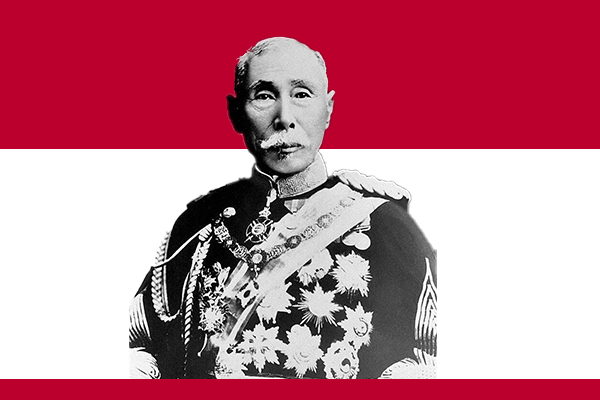
Early Life and Education
Yamagata Aritomo was born on June 14, 1838, in Hagi, Chōshū Domain, Japan. He grew up in a samurai family that valued discipline and education. His parents encouraged him to study Confucian classics and military science. Yamagata attended Shokasonjuku Academy, where he learned from reformist scholar Yoshida Shōin. This education inspired him to participate in the movement that aimed to overthrow the Tokugawa shogunate.
Role in the Meiji Restoration
Yamagata actively supported the Meiji Restoration in 1868. He joined forces with other samurai leaders to dismantle the feudal system and restore imperial rule under Emperor Meiji. His military training and strategic thinking enabled him to organize troops effectively during this transitional period. As a result, he earned recognition as a skilled leader who contributed to the establishment of a centralized government.
Contributions as Prime Minister
Yamagata Aritomo served twice as Prime Minister of Japan—first from 1889 to 1891 and later from 1898 to 1900. He introduced key reforms that transformed Japan into a modern state.
Establishing a Modern Military
Yamagata prioritized building a strong military to protect Japan’s sovereignty. He adopted the Prussian model of military organization, creating a conscription system in 1873. This system required all able-bodied men to serve in the armed forces. He also founded military academies to train officers in modern warfare techniques. His reforms laid the foundation for Japan’s powerful Imperial Army.
Strengthening Political Institutions
As Prime Minister, Yamagata emphasized the importance of a constitutional government. He supported the establishment of the Meiji Constitution in 1889, which introduced a parliamentary system with limited suffrage. He believed in balancing imperial authority with modern political institutions. His leadership helped stabilize Japan during its early modernization phase.
Expansion of Japan’s Influence
Yamagata encouraged Japan to expand its influence in East Asia. He advocated for a strong foreign policy, leading Japan into conflicts such as the First Sino-Japanese War (1894–1895). His strategies enabled Japan to emerge as a regional power by the end of the 19th century.
Later Life and Legacy
After retiring from the Prime Minister’s office, Yamagata continued to influence Japan’s politics as a genrō, or elder statesman. He advised emperors and successive governments on military and political matters. His vision for a modern and militarily secure Japan shaped the country’s trajectory well into the 20th century.
Yamagata Aritomo passed away on February 1, 1922. Japan remembered him as the “Father of Japanese Militarism” because of his role in modernizing the army and strengthening national defense.
Conclusion
Yamagata Aritomo transformed Japan into a modern, centralized, and militarily strong nation. Through his leadership as Prime Minister and military reformer, he laid the groundwork for Japan’s emergence as a major power in Asia. His contributions in politics, military, and governance continue to influence Japan’s history even today.