Abdulaziz
Reign: 23 September 1932 – 9 November 1953
Coronation: 23 September 1932
Home State: Riyadh
Lifespan: 1875 – 1953
Country: Saudi Arabia
Image credits available here.
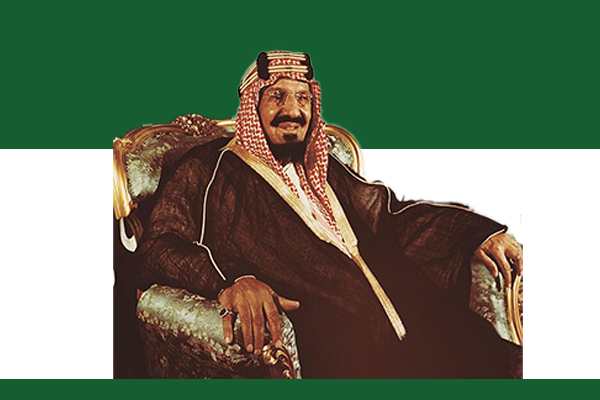
Early Life and Formative Years
Abdulaziz ibn Saud was born in 1876 in Riyadh into the prominent Al Saud family. During his childhood, political instability forced his family into exile in Kuwait after the Rashidi dynasty captured Riyadh. These early hardships strengthened Abdulaziz’s resolve and sharpened his understanding of tribal politics, warfare, and diplomacy. He studied Islamic teachings closely, which later guided his leadership and governance style.
The Recapture of Riyadh
In 1902, Abdulaziz launched a bold campaign to reclaim Riyadh. With a small group of loyal followers, he successfully seized the Masmak Fort, marking the beginning of his long struggle to reunite Arabia. This decisive act demonstrated his courage and strategic brilliance. From this point onward, Abdulaziz steadily expanded his influence across central Arabia.
Unification of the Arabian Peninsula
King Abdulaziz united vast territories through a combination of military strength, diplomacy, and religious legitimacy. He forged alliances with tribes, resolved conflicts through negotiation when possible, and used force when necessary. By aligning his leadership with Islamic principles, he gained widespread support among tribal communities. In 1932, he formally proclaimed the establishment of the Kingdom of Saudi Arabia, becoming its first king.
Governance and State Building
Abdulaziz focused on creating a stable and just administration. He established systems of governance rooted in Islamic law while also introducing modern administrative practices. He ensured internal security, improved communication between regions, and promoted unity among diverse tribes. His leadership emphasized justice, consultation, and loyalty to the state.
Economic Transformation and Oil Discovery
One of King Abdulaziz’s most lasting achievements involved transforming the kingdom’s economy. He approved oil exploration agreements that eventually led to the discovery of vast petroleum reserves in 1938. This discovery changed Saudi Arabia’s future, providing the financial resources necessary for development, infrastructure, and modernization. Abdulaziz used oil revenues carefully to strengthen the state and improve the welfare of his people.
Foreign Policy and International Recognition
King Abdulaziz established Saudi Arabia as a respected international player. He maintained balanced relations with major global powers while safeguarding national sovereignty. His diplomacy emphasized independence, Islamic identity, and regional stability. Through treaties and alliances, he secured recognition for Saudi Arabia on the world stage.
Legacy and Historical Significance
King Abdulaziz died in 1953, leaving behind a unified and stable kingdom. His leadership shaped Saudi Arabia’s political system, social structure, and national identity. He earned recognition as a visionary leader who transformed a divided land into a powerful nation. Today, Saudis remember him as the founder of the kingdom and the architect of its enduring strength.