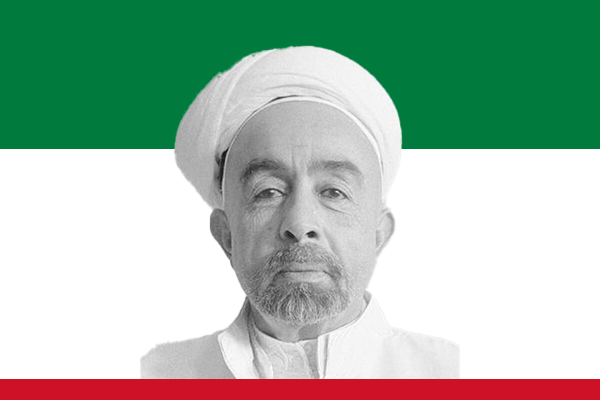
Early Life and Family Background
King Abdullah I was born on 2 February 1882 in Mecca, then part of the Ottoman Empire. He belonged to the prestigious Hashemite family, which traced its lineage directly to the Prophet Muhammad. His father, Sharif Hussein bin Ali, served as the Sharif and Emir of Mecca and later led the Arab Revolt against Ottoman rule during the First World War.
Abdullah received a traditional Islamic education along with modern political training. From a young age, he showed a keen interest in governance, diplomacy, and Arab unity. These early influences shaped his ambition to establish an independent Arab state.
Role in the Arab Revolt
During World War I, Abdullah actively supported his father in the Arab Revolt of 1916. He worked closely with Arab leaders and foreign powers to weaken Ottoman control in the region. His political engagement during this period helped him gain experience in negotiation and leadership.
Although the revolt did not result in the unified Arab kingdom that many had envisioned, it positioned Abdullah as an important political leader in the post-war Middle East.
Establishment of Transjordan
After the war, Abdullah turned his attention to Transjordan, a territory east of the Jordan River. In 1921, with British support, he became the Emir of Transjordan. He focused on building administrative institutions, maintaining security, and uniting diverse tribal groups under a central authority.
Abdullah ruled as emir for more than two decades, gradually strengthening local governance. His pragmatic leadership helped stabilize the region during a time of uncertainty and colonial influence.
Becoming King of Jordan
In 1946, Transjordan gained full independence, and Abdullah was proclaimed King Abdullah I of the Hashemite Kingdom of Jordan. As king, he sought to balance internal development with regional diplomacy. He emphasized law, order, and the gradual modernization of the state.
King Abdullah I played a controversial but significant role in regional politics, especially during the Arab-Israeli conflict. His decisions reflected his belief in negotiated solutions and long-term stability for his kingdom.
Vision and Leadership Style
King Abdullah I believed in constitutional monarchy and gradual reform rather than sudden change. He valued dialogue, diplomacy, and compromise. His leadership style combined traditional authority with modern statecraft, allowing Jordan to survive and grow despite limited resources.
He also worked to integrate Palestinians into Jordanian political and social life, shaping the kingdom’s demographic and political future.
Assassination and Legacy
King Abdullah I was assassinated on 20 July 1951 in Jerusalem. His death shocked the region and marked the end of an era. Despite controversies surrounding some of his policies, his contribution to nation-building remains undeniable.
Today, King Abdullah I is remembered as the founder of modern Jordan. His efforts established political stability, laid the groundwork for future development, and secured a lasting role for the Hashemite monarchy in the Middle East.
Conclusion
King Abdullah I’s life reflected the challenges and ambitions of the early modern Arab world. Through resilience, political skill, and vision, he transformed a fragile territory into an independent kingdom. His legacy continues to influence Jordan’s identity and leadership to this day.