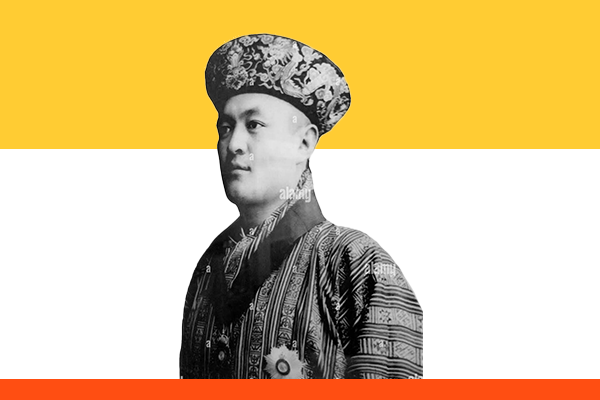
Mr. Jigme Wangchuck
Coronation: 14 March 1927
Reign: 26 Aug 1926 – 30 March 1952
Home State: Thinley Rabten Palace
Lifespan: 1905 – 30/03/1952
Early Life and Accession
Mr. Jigme Wangchuck was born in 1905 at Thinley Rabten Palace in Wangdue Phodrang, Bhutan. He was the eldest son of Ugyen Wangchuck, the first Druk Gyalpo (King) of Bhutan. He received early education in English, Hindi, and Buddhist teachings at Wangduechhoeling Palace. In 1923, he was appointed as the Penlop of Trongsa, a position traditionally held by the heir to the throne. Upon his father’s death in 1926, he became the second king of Bhutan and was formally crowned at Punakha Dzong on March 14, 1927.
Reforms and Development
During his reign, Jigme Wangchuck focused on modernizing Bhutan in a manner that respected the country’s deep-rooted traditions and values. He undertook the renovation of many dzongs (fortress-monasteries), and emphasized the importance of education and healthcare. Although constrained by financial and geographical challenges, he managed to establish a few schools and basic health facilities, laying the foundation for future development.
Judicial and Legal Improvements
King Jigme Wangchuck introduced several judicial reforms. He limited the application of capital punishment, restricting it to cases of murder, and allowed citizens to directly appeal to him, thereby ensuring greater transparency and fairness in the judicial system. He also worked on simplifying tax systems, moving from payment in goods to cash-based taxation.
Foreign Relations and Diplomacy
The king maintained Bhutan’s sovereignty during a time of significant regional change. During World War II, he supported the British war effort by donating 100,000 rupees. After India gained independence in 1947, Jigme Wangchuck signed the Indo-Bhutan Treaty of Friendship in 1949. This treaty ensured Bhutan’s independence in internal affairs, while India assisted in foreign relations and development aid.
Legacy and Death
Jigme Wangchuck’s reign is remembered for his steady and cautious approach to reform. His contributions to legal structure, governance, and foreign diplomacy created a strong foundation for Bhutan’s transition into a modern state. He passed away on March 30, 1952, at Kuenga Rabten Palace. His son, Jigme Dorji Wangchuck, succeeded him and carried forward his vision of modernization.
Conclusion
Jigme Wangchuck played a crucial role in shaping Bhutan’s early development as a unified and sovereign kingdom. His prudent leadership, dedication to cultural preservation, and groundwork in governance and legal reforms left a lasting impact on the nation. His reign was a bridge between Bhutan’s traditional past and the steps toward modern transformation that followed under his successors.