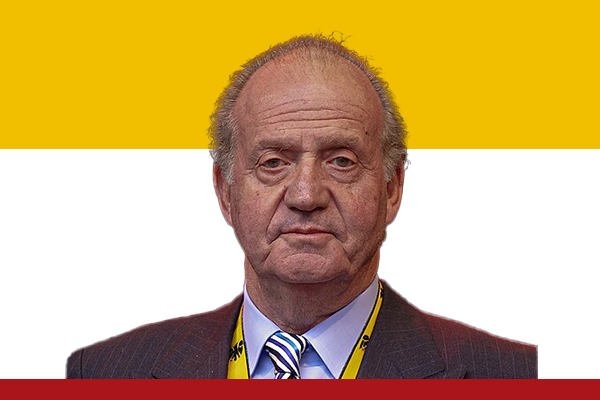
Early Life and Education
King Juan Carlos I was born on January 5, 1938, in Rome, Italy, where his family lived in exile during Francisco Franco’s dictatorship. His parents, Don Juan, Count of Barcelona, and Doña María de las Mercedes of Bourbon-Two Sicilies, raised him with strong royal and patriotic values. As a young boy, he studied in Portugal and later moved to Spain in 1948 to receive his education under Franco’s supervision. Juan Carlos attended military academies of the Army, Navy, and Air Force, and later pursued political and legal studies at the Complutense University of Madrid. His training equipped him with discipline, leadership, and a deep understanding of Spain’s political complexities.
Becoming King of Spain
After decades of dictatorship, Franco chose Juan Carlos as his successor in 1969, granting him the title “Prince of Spain.” Many Spaniards doubted his independence, assuming he would continue Franco’s authoritarian legacy. However, when Franco died in November 1975, Juan Carlos took the throne and immediately began transforming Spain’s political landscape. On November 22, 1975, he was proclaimed King Juan Carlos I, marking the beginning of a new constitutional era.
Championing Democracy
Instead of upholding Franco’s authoritarian regime, Juan Carlos initiated democratic reforms. He appointed Adolfo Suárez as Prime Minister in 1976, a decision that surprised conservatives but delighted reformists. The King supported the drafting of the 1978 Constitution, which established Spain as a parliamentary democracy. His leadership allowed Spain to hold free elections, legalize political parties, and restore civil liberties.
During the 1981 coup attempt, known as the 23-F incident, Juan Carlos proved his commitment to democracy. He addressed the nation on television in full military uniform, urging the armed forces to remain loyal to the constitution. His decisive action prevented the coup and reinforced his image as a protector of democratic values. Spaniards widely praised him for saving democracy at a critical moment.
Modernizing Spain and Strengthening Diplomacy
King Juan Carlos I worked tirelessly to modernize Spain’s image on the global stage. He encouraged economic growth, integration into the European Community, and strong relations with Latin American countries. His diplomatic skills improved Spain’s international reputation, especially within the European Union and NATO. He frequently traveled abroad to promote Spain’s interests, attract investment, and foster cultural cooperation.
Domestically, he supported industrial modernization and social reforms, helping Spain transition into a modern European nation. Under his guidance, Spain enjoyed stability, prosperity, and growing international influence throughout the 1980s and 1990s.
Challenges and Abdication
In the later years of his reign, King Juan Carlos faced controversies that affected his popularity. Allegations of corruption involving members of the royal family and a controversial elephant-hunting trip during Spain’s economic crisis damaged his public image. Aware of the changing sentiment, Juan Carlos decided to abdicate the throne in 2014 in favor of his son, Felipe VI. His decision demonstrated humility and a sense of responsibility toward the monarchy’s future.
Legacy of a Transformative Monarch
Despite later controversies, King Juan Carlos I remains a central figure in Spain’s modern history. He transformed the nation from dictatorship to democracy, ensured the stability of its institutions, and promoted reconciliation after decades of division. His leadership during the transition period earned him admiration both in Spain and abroad.
Juan Carlos’s legacy continues to influence Spain’s democratic identity. Historians and citizens alike recognize him as the monarch who bridged the old and new Spain, ensuring that freedom, constitutional rule, and modernization defined the nation’s future. His reign stands as a remarkable example of courage, reform, and vision in Europe’s modern monarchy.