Mr. Abdul Qadir
In Office: 28 April 1978 – 30 April 1978
Political Party: People’s Democratic Party
Home state: Herat
Lifespan: 1944 –2014
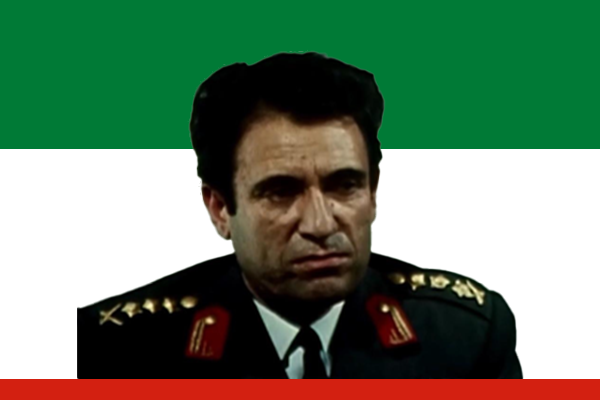
Early Life and Military Beginnings
Abdul Qadir was born in Herat, Afghanistan, in 1929, into a family of military background. He joined the Royal Afghan Air Force in the 1950s, where he received training both domestically and abroad, including in the Soviet Union. A skilled pilot and ambitious officer, Qadir quickly rose through the ranks and became known as a loyal yet reform-minded member of the Afghan military establishment.
His military training, international exposure, and association with progressive movements laid the foundation for his later political involvement. He was among the younger generation of officers who believed in modernization, secular governance, and socialist ideals, increasingly disillusioned with the slow reforms and entrenched power of the Afghan monarchy.
Role in the 1973 Republican Coup
In 1973, Abdul Qadir played a supporting role in Mohammad Daoud Khan’s coup that overthrew King Zahir Shah and abolished the monarchy. Though Daoud became president, Qadir’s role in the military gave him increasing influence. However, ideological rifts between Daoud and left-leaning factions, including Qadir, grew over time.
Qadir was sympathetic to the People’s Democratic Party of Afghanistan (PDPA), a Marxist-Leninist party divided into two rival factions—Khalq and Parcham. His connections with the PDPA eventually placed him at the center of the next major upheaval in Afghan politics.
Key Figure in the 1978 Saur Revolution
Colonel Abdul Qadir was one of the primary military leaders of the Saur Revolution in April 1978, which overthrew and assassinated President Daoud. Following the coup, the PDPA seized control of the country. For a brief period—from April to May 1978—Qadir served as Chairman of the Revolutionary Council of the Armed Forces, effectively acting as head of state until the PDPA installed Nur Muhammad Taraki as president.
Qadir was then appointed Minister of Defense, a role in which he helped consolidate PDPA control over the armed forces and oversaw political purges and restructuring. However, factional tensions between the Khalq and Parcham factions weakened the new regime’s unity. Qadir, aligned with the Parcham faction, fell out of favor with the Khalqist leadership, particularly Hafizullah Amin.
Fall from Power and Imprisonment
In August 1978, Qadir was dismissed from his position, arrested, and imprisoned by the Khalq faction, which had become dominant. He remained in prison until the Soviet invasion of Afghanistan in December 1979, when the USSR intervened to depose Amin and install a more moderate communist government under Babrak Karmal, a Parchamite.
Qadir was subsequently released and returned to political life, briefly serving again in government roles, including as Vice President and Ambassador. However, he never regained the influence he once held and eventually retired from public life.
Legacy
Abdul Qadir remains a controversial yet significant figure in Afghan history. He played a central role in both the 1973 and 1978 coups that dramatically altered the country’s trajectory. As a military officer and leftist revolutionary, he symbolizes the turbulent attempt to bring radical reform and socialism to Afghanistan. His life reflects the deep divisions, ideological shifts, and foreign interventions that have shaped modern Afghan history.