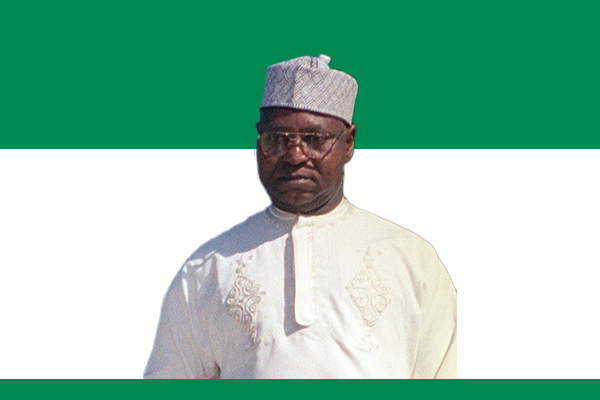
Early Life and Military Career
Abdulsalami Abubakar was born on June 13, 1942, in Minna, Niger State, Nigeria. He grew up in a disciplined environment that shaped his commitment to service and leadership. After completing his primary and secondary education, he joined the Nigerian Air Force but soon transferred to the Nigerian Army. He attended the Nigerian Defence Academy and later took advanced military training in both Nigeria and abroad.
Throughout his military career, Abubakar served in various command and staff positions, gaining respect for his professionalism and integrity. His experience in logistics and administration helped him rise through the ranks. His calm nature and ability to resolve conflicts earned him admiration among his peers and subordinates.
Rise to Power
Abdulsalami Abubakar became Nigeria’s Head of State on June 9, 1998, following the sudden death of General Sani Abacha. The nation was facing political uncertainty and tension, but Abubakar quickly took control of the situation. He promised to restore democracy and return Nigeria to civilian rule. His leadership focused on stabilizing the country and preparing for a peaceful transition.
Abubakar immediately released several political prisoners who had been detained during Abacha’s regime. This decision restored public confidence and reduced political tension across the nation. He also established contact with pro-democracy groups, political parties, and civil society organizations, ensuring inclusivity in the transition process.
Democratic Transition and Reforms
President Abubakar initiated a clear timetable for Nigeria’s transition to democratic governance. He organized the creation of a new constitution that guaranteed fundamental human rights and strengthened democratic institutions. He also set up the Independent National Electoral Commission (INEC) to oversee free and fair elections.
Under his leadership, Nigeria conducted local, state, and national elections between December 1998 and February 1999. These elections were widely regarded as transparent and credible. On May 29, 1999, Abdulsalami Abubakar handed over power to the newly elected civilian president, Olusegun Obasanjo. This peaceful transfer marked the beginning of Nigeria’s Fourth Republic and restored international confidence in the country.
Leadership Style and Legacy
Abubakar’s leadership style reflected humility, discipline, and commitment to national unity. He avoided political persecution and focused on reconciliation and peacebuilding. His administration worked to restore Nigeria’s global reputation after years of military dictatorship.
After leaving office, Abubakar continued to play an important role in promoting peace and democracy across Africa. He became involved in various mediation efforts, helping to resolve conflicts in Liberia, Niger, and Chad. His foundation, the Abdulsalami Abubakar Institute for Peace and Sustainable Development Studies, focuses on conflict resolution and sustainable governance in Africa.
Personal Life and Honours
Abdulsalami Abubakar is married to Justice Fati Lami Abubakar, a respected jurist and former Chief Justice of Nigeria. Together, they have worked to promote education, women’s rights, and good governance. He has received numerous awards and international recognition for his dedication to peace and democracy.
Conclusion
President Abdulsalami Abubakar stands as one of Nigeria’s most respected leaders. He demonstrated integrity, courage, and selflessness during a defining moment in the nation’s history. His leadership ended decades of military rule and paved the way for a democratic Nigeria. Through his actions, Abubakar proved that leadership grounded in service, unity, and peace can transform a nation’s destiny.