Mr. Afonso Pena
In Office: 15 November 1906 – 14 June 1909
Political Party: Mineiro Republican Party
Home State: Santa Bárbara
Lifespan: 1847–1909
Country: Brazil
Image credits available here.
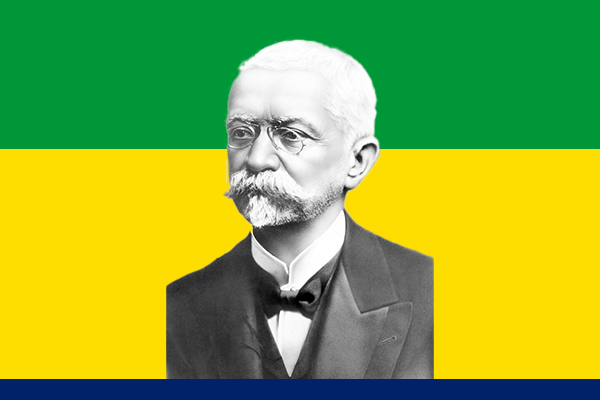
Early Life and Political Rise
Afonso Augusto Moreira Pena was born on November 30, 1847, in Santa Bárbara, Minas Gerais, Brazil. He grew up in a traditional Brazilian family that valued education and civic duty. Pena pursued law at the Faculty of Law of São Paulo, where he displayed remarkable intellect and leadership. After graduating, he began his career as a lawyer and soon entered politics with a strong desire to serve his country.
As a member of the Liberal Party, Pena took an active role in political debates and policy-making. He was elected to the Provincial Assembly of Minas Gerais, where he promoted administrative efficiency and infrastructure development. His dedication and clear vision helped him earn respect from both his colleagues and the public. Pena’s leadership qualities soon propelled him to national prominence.
Leadership in the Republic
After the proclamation of the Republic in 1889, Afonso Pena actively participated in shaping Brazil’s new political structure. He served as Minister of Agriculture, Commerce, and Public Works, where he promoted agricultural expansion and improved transportation networks. Pena also held the positions of Minister of Justice and Minister of the Interior, demonstrating his versatile administrative ability.
In these roles, Pena worked tirelessly to strengthen Brazil’s institutional framework. He advocated modernization of laws, improved government accountability, and encouraged economic growth through infrastructure projects. His reputation as a competent and honest statesman grew rapidly, paving his way to the presidency.
Presidency and Modernization Efforts
Afonso Pena became the sixth President of Brazil on November 15, 1906. From the beginning of his term, he focused on modernization, industrial development, and education reform. He actively encouraged immigration to enhance Brazil’s workforce and agricultural productivity. Pena supported the construction of railroads and the improvement of ports, aiming to connect Brazil’s vast regions and facilitate trade.
Under his leadership, the government promoted new industries and strengthened the economy. Pena introduced policies that stabilized public finances and improved administrative management. He also believed that education was the key to progress and encouraged the creation of new schools and technical institutes. By investing in human capital, he aimed to build a strong foundation for national development.
Pena also managed Brazil’s coffee economy with great skill. During a time when the coffee sector dominated Brazilian exports, he introduced measures to stabilize prices and support farmers. His government established the “Taubaté Agreement,” which provided price guarantees to coffee producers, ensuring stability in the economy.
Challenges and Final Years
Despite his achievements, Afonso Pena faced political opposition and economic challenges. Some critics disagreed with his focus on infrastructure and economic policies. However, Pena remained committed to his vision of a modern, industrialized Brazil. He maintained a calm and determined leadership style, always seeking to balance regional and national interests.
Toward the end of his presidency, Pena’s health began to decline. He planned to continue his reforms and strengthen national unity, but his life was cut short when he passed away on June 14, 1909, before completing his term. His death deeply saddened the nation, as Brazilians recognized his contributions to progress and modernization.
Legacy of Progress and Reform
Afonso Pena’s presidency left a lasting impact on Brazil. He transformed infrastructure, encouraged education, and strengthened economic policies that paved the way for future growth. His leadership style—firm, visionary, and dedicated—set an example for future generations.
Today, Brazilians remember President Afonso Pena as a leader who actively worked to shape a modern and prosperous nation. His legacy lives on in the institutions, industries, and policies that continue to support Brazil’s development. Through his commitment and forward-thinking leadership, Afonso Pena secured his place among Brazil’s most influential presidents.