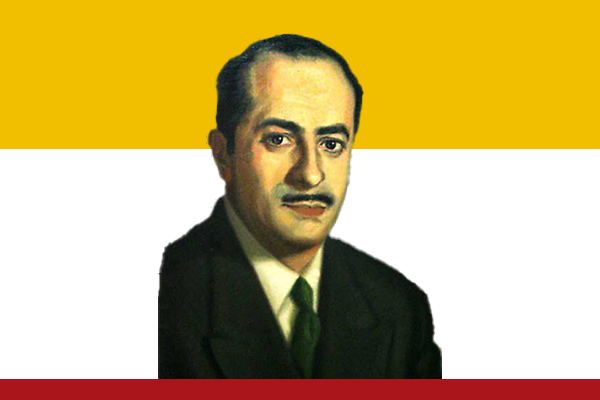
Early Life and Education
Alejandro Rodríguez de Valcárcel was born on December 25, 1917, in Burgos, Spain. He grew up in a devout Catholic family that valued discipline and service to the nation. As a young man, he displayed a strong interest in law and politics. He pursued legal studies at the University of Valladolid, where he graduated with distinction. His education strengthened his belief in order, authority, and traditional values—principles that would later shape his political career.
Rise in the Francoist Regime
After completing his studies, Rodríguez de Valcárcel joined the Falange Española Tradicionalista y de las JONS, the official party of Francisco Franco’s regime. His loyalty and administrative skill quickly drew attention within the ranks of the government. During the early years of Franco’s rule, he took on various legal and administrative roles, earning a reputation as a reliable and competent official.
He served as Secretary-General of the Cortes Españolas (Spanish Parliament), where he helped shape legislation aligned with the values of the Franco regime. His dedication to maintaining political order and unity made him one of Franco’s most trusted officials. Through his disciplined approach, he gained influence over both civil and military sectors of the state.
Leadership of the Cortes
In 1969, Franco appointed Rodríguez de Valcárcel as President of the Cortes Españolas. In this role, he played a vital part in maintaining the legislative framework of the dictatorship. He presided over sessions with authority, ensuring that the parliament functioned according to Francoist principles. He emphasized loyalty to the regime and discouraged political dissent within official institutions.
Rodríguez de Valcárcel’s leadership reflected his belief in hierarchical order and the unity of Spain. He promoted laws that reinforced the government’s control while also advocating for gradual modernization to strengthen the nation’s administrative capacity. His tenure as President of the Cortes demonstrated his ability to balance rigid ideology with pragmatic governance.
Role During Franco’s Death and Transition
In 1975, when General Francisco Franco’s health began to decline, Rodríguez de Valcárcel took on a crucial role in ensuring political stability. As President of the Cortes, he presided over the official transition following Franco’s death on November 20, 1975. According to the provisions of the regime, he temporarily assumed the functions of Head of State until the formal proclamation of King Juan Carlos I on November 22, 1975.
During this short but significant period, Rodríguez de Valcárcel acted with solemnity and precision. He organized Franco’s state funeral and oversaw the constitutional transfer of power to the monarchy. His calm leadership helped Spain move through a delicate moment without unrest or political disorder.
Legacy and Death
After the transition, Rodríguez de Valcárcel gradually withdrew from public life. He continued to support conservative causes but avoided direct involvement in the new democratic politics. He passed away on October 22, 1976, in Madrid, leaving behind a complex legacy.
Many remember him as a symbol of institutional loyalty and order during the Francoist era. Others view him as a representative of an outdated authoritarian system. Nonetheless, his role in managing the post-Franco transition with dignity remains a key part of Spanish political history.
Conclusion
President Alejandro Rodríguez de Valcárcel shaped Spain’s political framework during one of its most controlled and ideologically driven periods. His leadership combined discipline, conservatism, and a sense of national duty. Though his career was deeply tied to Franco’s dictatorship, his calm handling of the nation’s transition marked him as a significant figure in Spain’s 20th-century political evolution.