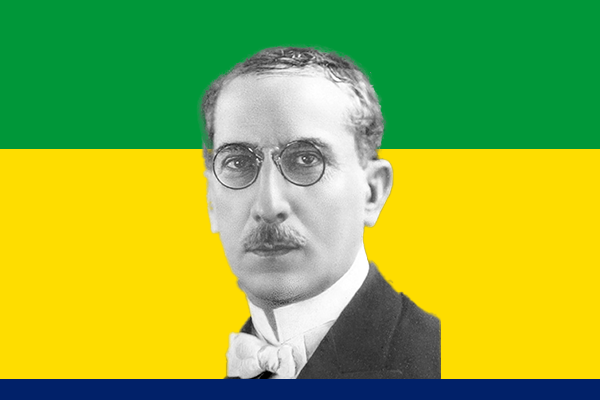
Early Life and Political Rise
Artur Bernardes was born on August 8, 1875, in Viçosa, Minas Gerais. He grew up in a family that valued education and civic responsibility. After earning his law degree from the Faculty of Law in Ouro Preto, he began his political career by joining the Republican Party of Minas Gerais. Bernardes demonstrated a strong sense of duty and quickly rose through the ranks due to his sharp intellect and ability to manage political negotiations.
As a member of the state legislature, he actively promoted policies that improved education and infrastructure in Minas Gerais. His pragmatic approach to governance helped him gain recognition among influential political circles. Eventually, he became governor of Minas Gerais in 1918, where he introduced administrative reforms and strengthened public institutions. His effective governance prepared him for the national stage.
Election and Political Challenges
In 1922, Bernardes contested the presidency of Brazil during a time of growing unrest. He faced intense opposition from both political rivals and segments of the military. Despite widespread tension, he won the election. Many critics accused him of using harsh measures to suppress dissent, but Bernardes believed in maintaining order to protect Brazil’s fragile democracy.
Soon after taking office, he confronted the Tenentista Movement—an uprising led by young military officers demanding political reform. Instead of conceding to military pressure, Bernardes acted decisively. He declared a state of siege and took strict action against rebels, asserting civilian authority over the military. His determination to preserve constitutional order defined his presidency.
Governance and Reforms
President Bernardes focused on restoring stability and strengthening Brazil’s financial institutions. He implemented fiscal policies that improved government efficiency and reduced national debt. He also supported agricultural expansion and modernization to boost Brazil’s economy, especially the coffee industry, which remained central to the nation’s exports.
Bernardes introduced administrative reforms that centralized authority and improved communication between the federal and state governments. He prioritized public education and worked to modernize schools in rural areas. His administration encouraged industrial growth, promoted national unity, and expanded infrastructure projects like railways and roads.
Despite facing widespread criticism for his authoritarian style, Bernardes believed his firm approach was necessary to maintain Brazil’s stability. He aimed to balance modernization with social order, ensuring that progress did not come at the cost of national integrity.
Relations with the Military and Opposition
Throughout his presidency, Bernardes managed a complex relationship with the military. Many officers viewed his administration as overly rigid, while he considered the military’s interference in politics a threat to democracy. When revolts erupted, he responded with firmness rather than compromise. This decisive leadership earned him both respect and criticism.
Bernardes also faced opposition from political elites who sought to undermine his authority. Instead of yielding, he reinforced federal power and emphasized the importance of legal and institutional processes. His unwavering adherence to constitutional governance distinguished him from leaders who relied solely on populist strategies.
Legacy and Later Life
After leaving office in 1926, Bernardes continued to influence Brazilian politics as a respected statesman. He served as a federal deputy and remained active in the political debates of his time. His leadership left a lasting impact on Brazil’s political landscape, particularly in asserting civilian control over the military and upholding the rule of law.
Artur Bernardes passed away on March 23, 1955, leaving behind a legacy of resilience, discipline, and commitment to national unity. He remains a figure who symbolizes the strength and determination required to guide Brazil through turbulent periods of its history.
Conclusion
President Artur Bernardes led Brazil with resolve during one of its most politically unstable eras. By asserting strong leadership, enforcing constitutional order, and implementing financial reforms, he preserved the nation’s democratic structure. His presidency reflected the challenges of balancing modernization with authority, making him a pivotal figure in Brazil’s journey toward stable governance.