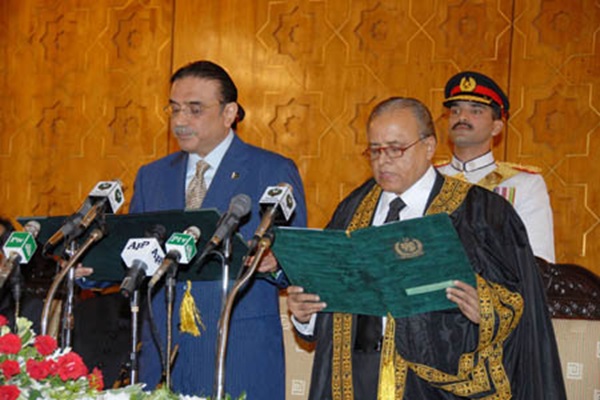
Mr. Asif Ali Zardari
Assumed office: 10 March 2024
In Office: 9 September 2008 – 9 September 2013
Political Party: Pakistan Muslim League
Home State: Karachi

Introduction
Asif Ali Zardari, a prominent Pakistani politician and co-chairman of the Pakistan Peoples Party (PPP), served as the 11th President of Pakistan from 2008 to 2013. Initially known as the husband of former Prime Minister Benazir Bhutto, Zardari emerged as a key political figure in his own right following her assassination. His presidency marked Pakistan’s first complete democratic term in decades and was defined by constitutional reforms, economic challenges, and political controversy.
Early Life and Background
Born on July 26, 1955, in Karachi, Asif Ali Zardari comes from a prominent landowning Sindhi family. He studied at Cadet College Petaro and later attended institutions in London. In 1987, he married Benazir Bhutto, the daughter of former Prime Minister Zulfikar Ali Bhutto, linking him to one of Pakistan’s most influential political dynasties.
Political Entry and Controversies
Zardari entered politics during Benazir Bhutto’s first term as Prime Minister in 1988. While holding informal influence, he faced accusations of corruption and was jailed multiple times in the 1990s and early 2000s without conviction. Supporters view these charges as politically motivated. After Benazir’s return from exile in 2007 and subsequent assassination, Zardari inherited the PPP’s leadership and became its co-chairman alongside his son, Bilawal Bhutto Zardari.
Presidency (2008–2013)
In 2008, Zardari was elected President by the Parliament following General Pervez Musharraf‘s resignation. His presidency came during a period of internal terrorism, economic instability, and strained civil-military relations. Notably, Zardari voluntarily gave up key presidential powers to Parliament, including the authority to dissolve the National Assembly, through the 18th Constitutional Amendment—strengthening parliamentary democracy.
Challenges During His Tenure
During Zardari’s presidency, Pakistan faced a struggling economy, severe energy shortages, and widespread allegations of corruption directed at the PPP-led government. His administration responded to devastating natural disasters, such as the 2010 floods, and navigated complex diplomatic tensions following the 2011 U.S. operation that killed Osama bin Laden in Abbottabad. Despite ongoing criticism, Zardari became the first president in Pakistan’s history to complete a full term under a democratic transfer of power.
Post-Presidency and Later Political Role
After stepping down in 2013, Zardari continued to lead the PPP alongside his son, Bilawal Bhutto Zardari. While his popularity declined in some regions, he maintained significant political control in Sindh. In 2018, he won a seat in the National Assembly. However, legal authorities initiated several investigations into alleged money laundering, which kept him entangled in court proceedings.
Legacy
Asif Ali Zardari left behind a complex legacy. Many Pakistanis credit him with restoring parliamentary democracy and limiting presidential powers through the 18th Amendment. Critics, however, point to corruption scandals and ineffective governance during his administration. Supporters argue that he safeguarded civilian authority during a fragile political transition and remained resilient under intense pressure.
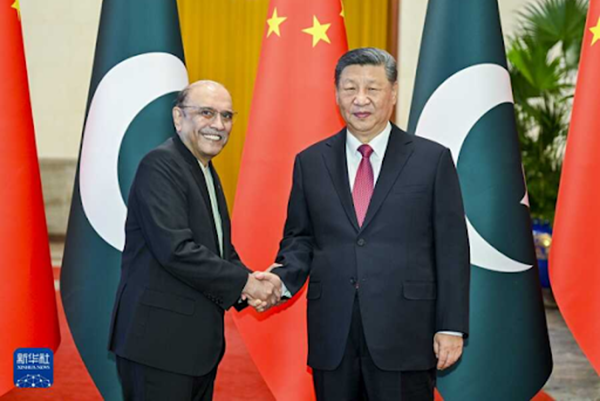
Zardari With Xi Jinping
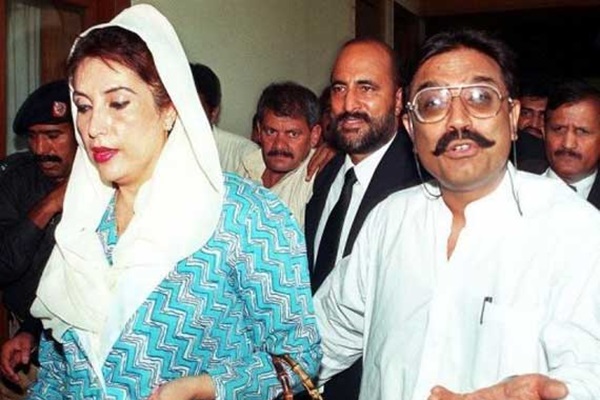
Zardari With Benazir Butto