Mr. Burhanuddin Rabbani
In Office: 28 June 1992 – 22 December 2001
Political Party: Jamiat-e-Islami
Home state: Badakhshan Province
Lifespan: 1940–2011
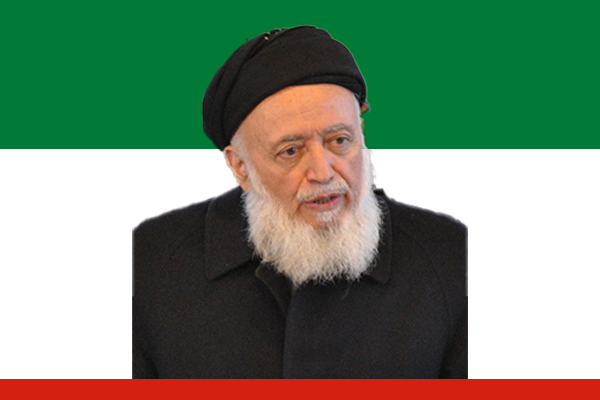
Early Life and Education
Mr. Burhanuddin Rabbani was born in 1940 in Badakhshan Province, northeastern Afghanistan. He belonged to the Tajik ethnic group and grew up in a devout Islamic family. Rabbani studied Islamic theology at Kabul University and earned a degree in Islamic Law. His academic excellence led him to receive a scholarship to Al-Azhar University in Cairo. There, he encountered Islamic political ideologies, particularly those of the Muslim Brotherhood. These ideas profoundly shaped his political outlook and laid the foundation for his future involvement in Islamic political activism.
Founding of Jamiat-e Islami
After returning to Afghanistan in the early 1970s, Rabbani began teaching at Kabul University and soon founded the Jamiat-e Islami party. The movement brought together Islamic intellectuals and students who advocated for a society based on Islamic principles. As political repression intensified under the Daoud regime and later the communist government, Rabbani and his followers transformed Jamiat-e Islami into an armed resistance movement, especially after the Soviet invasion in 1979.
Rabbani’s group, composed mainly of Tajiks and moderate Islamists, became one of the most influential mujahideen factions. He collaborated closely with his most prominent military commander, Ahmad Shah Massoud, who led Jamiat forces in successful campaigns against Soviet troops in the north and northeast.
Resistance Leadership during Soviet Occupation
Throughout the 1980s, Rabbani played a vital diplomatic and political role in the anti-Soviet resistance. While commanders like Massoud concentrated on military strategy, Rabbani coordinated with international allies such as Pakistan, Saudi Arabia, and the United States. He positioned himself as a moderate Islamic leader who aimed to unify the resistance under a national Islamic framework.
Presidency and Civil War
After mujahideen forces overthrew the communist Najibullah regime in 1992, Rabbani assumed the presidency of the Islamic State of Afghanistan. Mujahideen leaders appointed him interim president under the Peshawar Accord, and a council of leaders later confirmed him in the role. However, his presidency coincided with a devastating civil war among rival mujahideen factions. His former ally, Gulbuddin Hekmatyar, and other commanders rejected his leadership and launched violent campaigns, particularly in Kabul.
Rabbani attempted to establish a functioning Islamic government, but internal rivalries, foreign interference, and ethnic divisions severely undermined his efforts. In 1996, the Taliban seized control of Kabul, forcing Rabbani and his administration to retreat to northern Afghanistan, where they joined the Northern Alliance.
Return to Politics and Assassination
Following the U.S. intervention in 2001, which ousted the Taliban, Rabbani returned to Kabul and reentered national politics. He served as a senior political figure and, in 2010, accepted the role of head of the High Peace Council. In this position, he led efforts to negotiate with the Taliban for national reconciliation.
On September 20, 2011, a suicide bomber posing as a Taliban peace envoy assassinated Rabbani. His assassination dealt a major blow to the peace process in Afghanistan.
Legacy
Many Afghans remember Burhanuddin Rabbani as a scholar, resistance leader, president, and peacemaker. Despite facing criticism for his role during the civil war, he remained committed to Islamic values, Afghan independence, and reconciliation. His legacy endures through the Jamiat-e Islami party and his son, Salahuddin Rabbani, who also became an influential national leader.