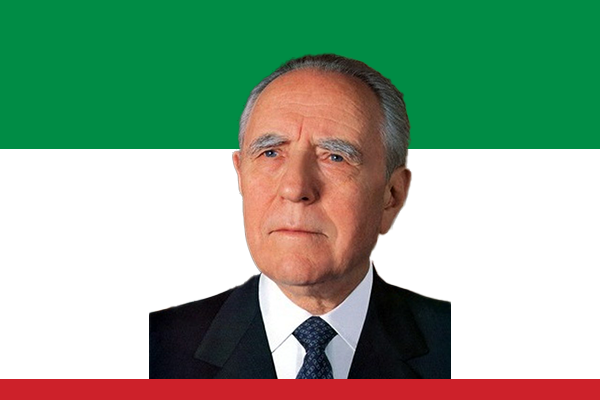
Early Life and Career in Finance
Ciampi graduated in law from the University of Pisa in 1942 and immediately pursued a career in public service. In 1946, he joined the Bank of Italy, where he actively contributed to post-war economic reconstruction. During his decades-long career at the bank, Ciampi actively implemented policies to stabilize Italy’s currency, control inflation, and modernize the national banking system. His expertise and diligence earned him the respect of colleagues and politicians alike, establishing him as a trusted figure in economic governance.
Leadership as Governor of the Bank of Italy
From 1979 to 1993, Ciampi served as Governor of the Bank of Italy. He actively guided Italy through challenging economic periods, including high inflation and political instability. Ciampi actively strengthened the central bank’s credibility, promoted sound monetary policies, and emphasized financial stability. His leadership contributed to Italy’s successful management of the lira and prepared the country for eventual integration into the European Monetary Union.
Ministerial Roles and Political Influence
Ciampi actively transitioned to politics in 1993, when he accepted the role of Minister of the Treasury, Budget, and Economic Programming. In this capacity, he actively promoted fiscal reforms, reduced public debt, and guided Italy toward meeting the European Union’s Maastricht criteria. Later, as Prime Minister from 1993 to 1994, he actively led a technocratic government during a period of political crisis, implementing reforms that stabilized the nation and reinforced public confidence.
Presidency of Italy
In 1999, Carlo Azeglio Ciampi became President of the Italian Republic, a role he actively used to strengthen national unity, civic responsibility, and Italy’s international presence. During his presidency (1999–2006), he actively promoted European integration, encouraged civic education, and emphasized respect for democratic institutions. Ciampi frequently traveled across Italy, delivering speeches that inspired citizens to engage actively in public life and preserve democratic values. His presidency reinforced Italy’s commitment to European cooperation and national cohesion.
Commitment to Culture and Education
Ciampi actively supported Italian culture, history, and education throughout his career. He encouraged the teaching of Italian civics in schools and promoted initiatives that connected citizens with Italy’s historical and cultural heritage. His emphasis on education and civic responsibility shaped Italy’s public discourse and strengthened national identity, leaving a lasting imprint on the country’s cultural landscape.
Legacy and Impact
Carlo Azeglio Ciampi left an enduring legacy as a dedicated public servant and statesman. Through active leadership in finance, politics, and the presidency, he strengthened Italy’s institutions, promoted economic stability, and fostered civic engagement. Italian citizens remember him as a leader who combined integrity, vision, and pragmatism to guide the nation through both economic challenges and societal change. His work continues to influence policymakers and inspires Italians to value democracy, responsibility, and national unity.