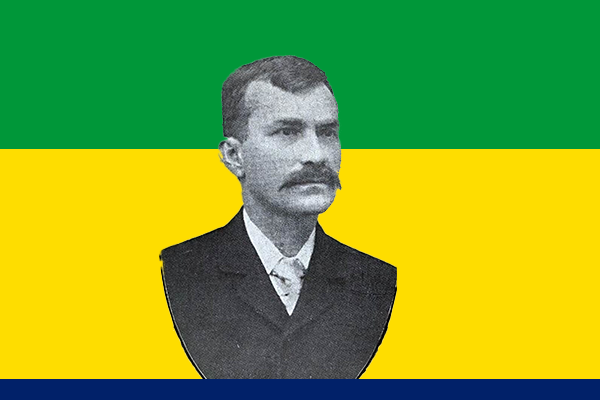
Mr. Delfim Moreira
In Office: 15 November 1918 – 28 July 1919
Political Party: Mineiro Republican Party
Home State: São Gabriel
Lifespan: 1868–1920
Country: Brazil
Image credits available here.
Early Life and Education
Delfim Moreira da Costa Ribeiro was born on November 7, 1868, in Cristina, Minas Gerais, Brazil. Coming from a modest background, he pursued education with determination and earned a law degree from the Faculty of Law of São Paulo. As a young man, he showed a strong sense of public duty and an inclination toward politics. His legal training equipped him with analytical skills and a deep understanding of Brazil’s evolving republican framework.
Political Rise and Governance Experience
Moreira began his political career as a state legislator in Minas Gerais, where he actively participated in shaping local policies. His competence and loyalty to the republican cause helped him rise through political ranks. In 1914, he became the Governor of Minas Gerais, one of Brazil’s most influential states. As governor, he promoted modernization, improved infrastructure, and supported education and agricultural reforms. His administrative skills earned him national recognition and paved the way for his future role in federal politics.
Path to the Presidency
In 1918, Brazil elected Rodrigues Alves as president, with Delfim Moreira as vice president. However, Alves fell gravely ill before assuming office due to complications from the influenza epidemic that swept through the country. As a result, Moreira stepped in as acting president on November 15, 1918. Although he initially assumed temporary control, Alves’s death in January 1919 made Moreira the de facto head of state until a new election could take place.
Leadership During Transition
As president, Delfim Moreira faced enormous challenges. Brazil was recovering from World War I and the devastating effects of the influenza pandemic. The economy struggled, and public morale remained low. Despite his own fragile health, Moreira took decisive actions to maintain governmental stability and reassure citizens. He restored order within the administrative framework and ensured that essential state functions continued uninterrupted.
Moreira valued political balance and sought to prevent conflicts among Brazil’s ruling elites. He relied on moderate policies and consultation with key figures in the military and civil administration. His leadership style emphasized consensus rather than confrontation, reflecting his commitment to unity during a turbulent time.
Commitment to Constitutional Order
Understanding that his presidency was transitional, Delfim Moreira worked diligently to uphold the constitution. He organized new presidential elections, demonstrating his respect for democratic procedures. In 1919, the country elected Epitácio Pessoa as president, and Moreira willingly transferred power, ensuring a smooth and lawful transition. This act reinforced Brazil’s republican values and showed his integrity as a statesman.
Later Years and Legacy
After leaving the presidency in July 1919, Moreira withdrew from active politics due to declining health. He returned to Minas Gerais, where he lived quietly until his death on July 1, 1920. Though his presidency was brief, his leadership during a time of national uncertainty left a lasting impression on Brazil’s political history.
Historians remember Delfim Moreira as a steady and responsible leader who upheld constitutional governance when Brazil needed it most. He maintained peace and continuity at a time when the nation could easily have descended into political chaos. His humility, sense of duty, and respect for democratic institutions helped shape Brazil’s transition between presidencies.
Conclusion
President Delfim Moreira played a crucial role in guiding Brazil through one of its most delicate political transitions. His administration ensured that the country remained stable, lawful, and united amid crisis. Although he never intended to lead as president, his brief tenure reflected courage, responsibility, and dedication to public service. Moreira’s legacy continues to symbolize the importance of constitutional leadership and integrity in Brazil’s democratic journey.