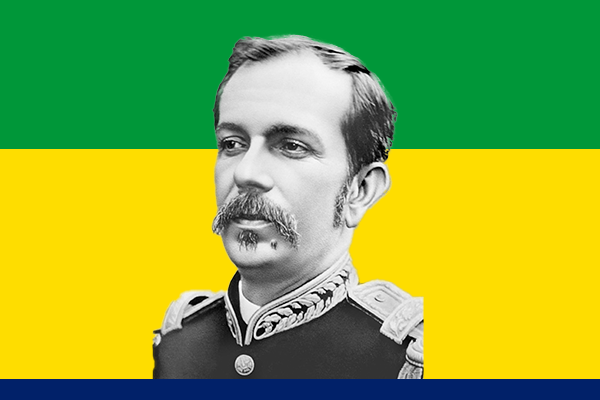
Early Life and Military Foundation
Floriano Vieira Peixoto was born on April 30, 1839, in Maceió, Alagoas, Brazil. He grew up in a modest family and pursued a career in the military, where he displayed exceptional discipline and leadership. He joined the Brazilian Army and quickly earned respect for his bravery and organizational skills. Peixoto’s commitment to duty and loyalty to the nation shaped his reputation as a dependable officer.
During the Paraguayan War (1864–1870), Peixoto played a crucial role in several decisive battles. His courage and strategic sense impressed his superiors and elevated his standing within the armed forces. These experiences prepared him for the political challenges that awaited him after the fall of the Brazilian monarchy.
Rise to the Presidency
After Emperor Pedro II was deposed in 1889, Marshal Deodoro da Fonseca became Brazil’s first president, and Floriano Peixoto served as his vice president. When political turmoil and economic difficulties forced Deodoro to resign in 1891, Peixoto assumed the presidency.
As the second president of Brazil and the first to take office by constitutional succession, Peixoto inherited a fragile government and a divided nation. Many questioned his legitimacy because he took office before completing half of the presidential term. However, he firmly defended his right to lead and took swift measures to preserve order.
Firm Leadership and Political Stability
President Peixoto ruled with discipline and strength. He believed that Brazil’s new republican institutions required stability before freedom could flourish. To prevent further chaos, he maintained strict control over the military and civil administration. His firm approach earned him the nickname “Iron Marshal.”
When regional revolts broke out, including the Revolta da Armada (Naval Revolt) and the Federalist Revolution, Peixoto acted decisively. He mobilized loyal troops to suppress the uprisings and reasserted federal authority. His determination restored order and reinforced the federal government’s legitimacy.
Despite criticism from political opponents who accused him of authoritarianism, Peixoto insisted that strong leadership was essential to defend the republic. He stabilized the economy, promoted administrative efficiency, and strengthened national institutions. His actions preserved the unity of Brazil during a period when the young republic could have easily collapsed.
Relationship with the Military and the People
As a career soldier, Peixoto maintained close ties with the armed forces. He relied on the military’s loyalty to enforce national policies and suppress rebellions. However, he also sought to balance military influence with civilian governance. He promoted discipline, merit, and patriotism within the army, ensuring it remained loyal to the constitution rather than personal power.
Among the public, Peixoto gained a reputation for honesty and integrity. Many Brazilians admired his sense of duty and viewed him as a protector of national order. His firm yet patriotic leadership restored citizens’ faith in the republic’s survival.
Legacy and Death
Floriano Peixoto left office in 1894 after completing his constitutional term. He refused to seek re-election, believing that leaders should serve the nation, not themselves. After retiring from politics, he lived a quiet life until his death on June 29, 1895.
History remembers him as a stabilizing force during Brazil’s early republican years. Peixoto’s determination, discipline, and unwavering patriotism helped secure the nation’s democratic future. His presidency demonstrated that strong and principled leadership could guide a country through chaos and lay the foundation for progress.
Conclusion
President Floriano Peixoto transformed a nation struggling with instability into one ready for growth. Through courage, resolve, and respect for constitutional order, he preserved Brazil’s unity and defended the republican cause. His legacy as the Iron Marshal continues to symbolize strength, integrity, and dedication to the Brazilian nation.