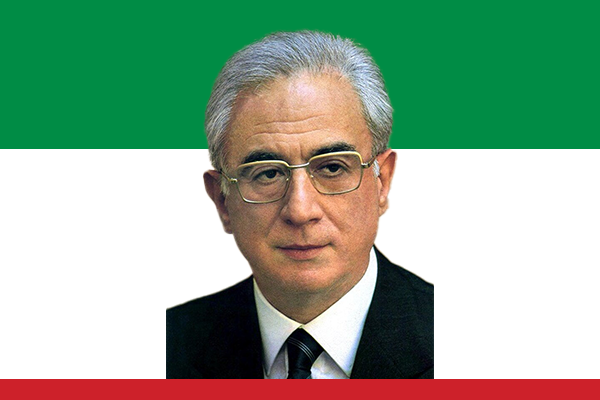
Early Life and Political Rise
Francesco Cossiga was born on July 26, 1928, in Sassari, Sardinia. He studied law at the University of Sassari, where he demonstrated early interest in political philosophy and governance. In his youth, he joined the Christian Democracy (Democrazia Cristiana) party and actively participated in local political activities. His sharp intellect and persuasive skills quickly gained him recognition within the party, setting the stage for a prominent career in national politics.
Cossiga entered the Italian Parliament in 1958 as a Member of the Chamber of Deputies. He consistently advocated for modernization in governance and sought to strengthen Italy’s democratic institutions. His focus on reform and efficiency in public administration earned him respect from colleagues across the political spectrum.
Role as Interior Minister
In 1978, Cossiga became Italy’s Minister of the Interior during one of the most challenging periods in the nation’s history. He took charge amid the Red Brigades’ terrorist attacks and the kidnapping of former Prime Minister Aldo Moro. Cossiga responded decisively, strengthening police operations and improving national security. His tough measures demonstrated his belief in maintaining law and order, though his actions also drew public debate and criticism. Despite the political turmoil, he emerged as a strong and capable leader committed to Italy’s stability.
As Prime Minister of Italy
In 1979, Cossiga became Prime Minister of Italy. He actively pursued administrative reforms, improved relations with trade unions, and strengthened Italy’s position within the European Community. His government emphasized economic stability and efficient public service. Although his tenure was short, he established himself as a pragmatic and results-oriented leader who valued both dialogue and decisive action. His leadership during this time demonstrated his commitment to political integrity and national progress.
Presidency of the Republic
Francesco Cossiga became President of Italy in 1985, one of the youngest individuals to hold the office. As President, he worked to protect the Constitution while promoting institutional modernization. He supported government efforts to improve Italy’s economy, security, and international standing. During his presidency, he maintained a balance between political neutrality and active engagement in national debates.
In the later years of his presidency, Cossiga became increasingly outspoken about the inefficiencies of the Italian political system. He openly criticized political corruption and the excessive influence of bureaucracy. His direct comments often created controversy, earning him both admiration and opposition. Italians began referring to him as “Il Picconatore” (The Pickax Wielder) for his sharp and relentless criticism of political hypocrisy.
Later Life and Legacy
After leaving office in 1992, Cossiga continued to influence Italian politics through speeches, writings, and academic work. He served as a senator for life, using his position to advocate for constitutional reforms and greater governmental transparency. Cossiga remained intellectually active, addressing issues such as political accountability, European integration, and democratic renewal.
He passed away on August 17, 2010, in Rome, leaving behind a complex yet powerful legacy. Italians remember him as a visionary leader who valued honesty and reform more than popularity. His career reflected courage, intellect, and dedication to national progress.
Conclusion
President Francesco Cossiga’s life tells the story of a statesman who reshaped Italy’s political dialogue. From his beginnings in Sardinia to his presidency, he consistently pursued reform, transparency, and institutional integrity. Though his outspoken nature sparked controversy, it also inspired political renewal. Cossiga’s leadership continues to symbolize Italy’s enduring quest for justice, democracy, and reform.