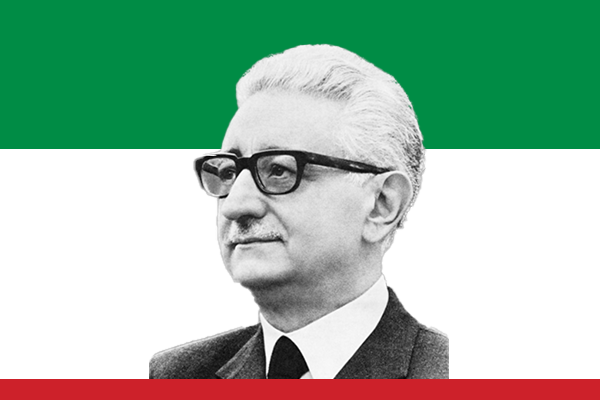
Early Life and Education
Giovanni Leone was born on November 3, 1908, in Naples, Italy. He grew up in a family that valued education and civic responsibility. His intellectual curiosity and passion for law guided him toward the University of Naples, where he studied jurisprudence. After earning his law degree, he pursued an academic career and became a professor of criminal law. Through his teaching, Leone inspired many students and developed a reputation as one of Italy’s leading legal scholars.
Entry into Politics
Leone entered politics after World War II, a time when Italy was rebuilding its democratic institutions. He joined the Christian Democracy (Democrazia Cristiana) party and actively participated in drafting policies that strengthened the new Republic. In 1948, he won a seat in the Chamber of Deputies, where he focused on justice reforms and constitutional matters. His expertise in law and his balanced approach to politics earned him respect across party lines.
Leadership Roles Before the Presidency
Before becoming President, Giovanni Leone served twice as Prime Minister and held several key positions within the Italian Parliament. As Speaker of the Chamber of Deputies, he managed legislative debates with fairness and authority. He also acted as Prime Minister in two caretaker governments, guiding Italy through transitional phases with calm and professionalism. In these roles, Leone demonstrated his ability to build consensus and maintain political stability during difficult times.
Presidency of the Italian Republic
In December 1971, Giovanni Leone was elected President of the Republic. As Head of State, he promoted national unity and worked to protect Italy’s democratic institutions. He exercised his constitutional powers with caution and wisdom, always prioritizing dialogue between political factions. During his presidency, Italy faced economic challenges and social unrest, including labor strikes and political violence. Leone responded by encouraging communication and compromise among leaders to preserve social peace.
He also played a vital role in maintaining Italy’s international relations. He represented Italy with dignity in global forums and strengthened diplomatic ties with European and Mediterranean countries. His presidency symbolized stability in a decade of uncertainty, as he worked tirelessly to uphold the values of democracy and constitutional law.
Resignation and Later Life
In 1978, Giovanni Leone resigned from the presidency following political pressure and allegations that were later proven unfounded. Despite the controversy, he left office with dignity, demonstrating his deep respect for democratic institutions. After his resignation, he returned to private life but continued contributing to legal scholarship and public discourse. He remained a respected voice in Italian politics and law until his passing on November 9, 2001.
Legacy and Contribution
Giovanni Leone’s legacy reflects his lifelong devotion to Italy’s legal and political development. As a constitutional expert, he strengthened the foundations of Italy’s democracy. As a politician, he promoted integrity, dialogue, and stability. His efforts as President emphasized the balance between state authority and civic freedom, making him one of the most principled leaders in Italian history.
Conclusion
President Giovanni Leone dedicated his life to serving Italy with honor and intellect. Through his leadership, he defended democracy, advanced justice, and guided the nation during moments of uncertainty. His contributions continue to inspire Italian political thought and underscore the enduring importance of integrity in public service.