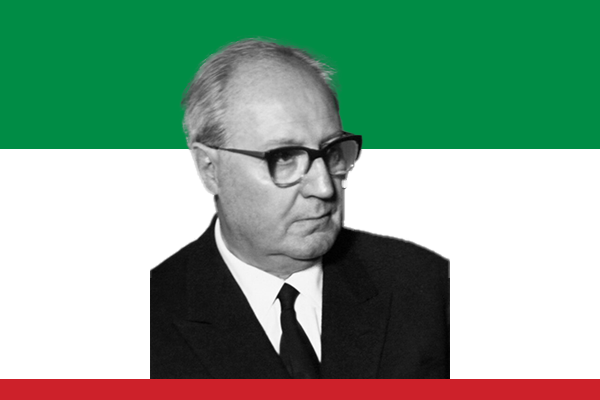
Early Life and Education
Giuseppe Saragat was born on September 19, 1898, in Turin, Italy. He grew up in a politically conscious family that valued freedom, education, and social justice. He pursued studies in economics and philosophy at the University of Turin, where he developed a strong interest in socialist thought and democratic values. Saragat’s intellectual foundation and early political activism prepared him for a lifetime dedicated to public service and reform.
Entry into Politics
Saragat entered politics in the 1920s, joining the Italian Socialist Party (PSI). He actively opposed Mussolini’s fascist regime and consistently advocated for democracy and workers’ rights. His commitment to justice and liberty forced him into exile in Austria and France during the fascist years. In exile, he strengthened his belief in democratic socialism and maintained connections with other European anti-fascist movements.
When World War II ended, Saragat returned to Italy determined to help rebuild the nation on democratic principles. He became one of the key architects of Italy’s post-war political system.
Founding the Italian Democratic Socialist Party
In 1947, Saragat broke away from the Italian Socialist Party due to ideological differences and founded the Italian Democratic Socialist Party (PSDI). He actively promoted a democratic and reformist vision of socialism, rejecting both communist and fascist extremes. His leadership helped unify moderate socialists and positioned the PSDI as an important centrist force in Italian politics.
Saragat worked tirelessly to promote cooperation among democratic forces, believing that stability and progress could only come through dialogue and compromise.
Diplomatic and Government Roles
Before becoming president, Saragat held several important governmental positions. He served as Italy’s ambassador to France, where he strengthened diplomatic relations and advocated for European cooperation. Later, he became Deputy Prime Minister and Minister of Foreign Affairs.
As Foreign Minister, he played a vital role in aligning Italy with Western democracies during the Cold War. He actively supported Italy’s participation in the North Atlantic Treaty Organization (NATO) and the European Economic Community (EEC). His diplomatic efforts helped secure Italy’s place among modern democratic nations and enhanced its international reputation.
Presidency of the Republic
Giuseppe Saragat became President of Italy in December 1964, succeeding Antonio Segni. As president, he focused on promoting national unity, defending democratic institutions, and ensuring social stability. He actively mediated between political parties during times of crisis and encouraged dialogue over division.
Saragat believed that Italy’s democracy could thrive only through cooperation and respect for constitutional values. He used his moral authority to uphold the rule of law and protect civil liberties. Under his leadership, Italy maintained political balance during an era marked by social unrest and economic challenges.
Legacy and Later Life
Saragat completed his presidential term in 1971, leaving behind a legacy of democratic strength and moral leadership. Even after leaving office, he continued to participate in political discussions, writing articles and speaking on issues of freedom, justice, and European unity.
Giuseppe Saragat passed away on June 11, 1988, in Rome. His contributions to Italian democracy remain widely recognized. Italians remember him as a leader who combined intellect with compassion, courage with moderation, and diplomacy with a deep commitment to justice.
Conclusion
President Giuseppe Saragat dedicated his life to defending democracy and promoting unity in Italy. His leadership helped guide the nation through difficult years and strengthened its democratic institutions. Through his vision, diplomacy, and unyielding belief in freedom, Saragat became a symbol of integrity and progress in modern Italian history.