Mr. Hamid Karzai
In Office Term 1: 22 December 2001 13 June 2002
Term 2: 13 June 2002 7 December 2004
Term 3: 7 December 2004 29 September 2014
Political Party: Independent
Home state: Kandahar
Lifespan: Born 1957
Country: Afghanistan
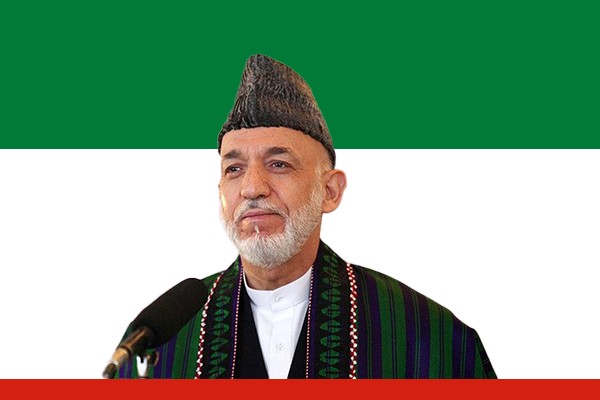
Early Life and Education
Hamid Karzai was born on December 24, 1957, in Kandahar, Afghanistan, into the influential Popalzai Pashtun tribe. His father, Abdul Ahad Karzai, was a prominent tribal leader and former deputy speaker of the Afghan parliament. Growing up in a politically active family, Karzai was introduced to national affairs from an early age. He completed his early education in Afghanistan and later pursued higher studies in India, earning a degree in political science from Himachal Pradesh University. His time abroad provided him with a global perspective and fluency in several languages, including English, Pashto, Dari, and Urdu.
Involvement in Mujahideen Resistance
During the 1980s, Karzai supported the mujahideen resistance against the Soviet occupation of Afghanistan. He served as a political advisor and fundraiser, developing ties with foreign allies, particularly the U.S. and Pakistan. After the Soviet withdrawal and the fall of the communist regime in 1992, Karzai supported the mujahideen government but soon became disillusioned with its internal conflicts and failures to establish stability.
Initially, Karzai viewed the Taliban favorably, hoping they would bring order to the country. However, he turned against them once their extremism and foreign influence—especially from Pakistan’s intelligence agencies—became apparent. He then became an active opponent of Taliban rule and worked to unite anti-Taliban Afghan factions.
Rise to Power Post-2001
After the U.S.-led invasion of Afghanistan in 2001, following the September 11 attacks, Karzai was selected to lead the interim government formed at the Bonn Conference. In December 2001, he was sworn in as Chairman of the Afghan Interim Administration, and in 2002, a Loya Jirga (grand assembly) appointed him as interim president. In 2004, he became Afghanistan’s first democratically elected president, winning widespread international support.
Presidency and Challenges
Mr. Hamid Karzai served as president from 2001 to 2014, overseeing Afghanistan’s transition from Taliban rule to a fledgling democracy. Under his leadership, a new constitution was adopted, and democratic institutions were established. Billions in foreign aid flowed into Afghanistan, funding infrastructure, education, and healthcare.
However, his presidency was plagued by corruption, weak governance, and an ongoing insurgency. Karzai’s government struggled to extend control beyond major cities, and accusations of electoral fraud, especially during the 2009 re-election, marred his image. His relationship with the U.S. soured in later years due to issues such as civilian casualties from NATO operations and his growing criticism of Western policies.
Post-Presidency Role
After leaving office in 2014, Karzai did not retire from politics. He remained an influential voice, advocating for peace, Afghan sovereignty, and dialogue with the Taliban. He frequently criticized both the Afghan government and foreign powers for policies he believed undermined national unity and independence.
Legacy
Mr. Hamid Karzai is one of Afghanistan’s most influential modern leaders. As the first post-Taliban president, he symbolized a new beginning for the country. While his tenure faced major challenges, he is credited with keeping the Afghan state intact during a volatile period. His role as a mediator and elder statesman continues to shape Afghan politics even after his presidency.