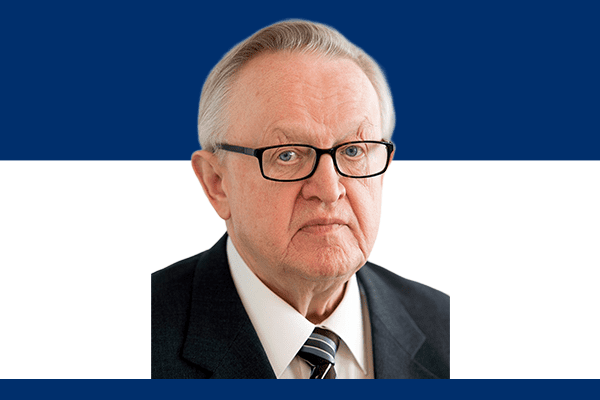
Early Life and Education
Martti Oiva Kalevi Ahtisaari was born on June 23, 1937, in Viipuri, Finland, which is now part of Russia. During World War II, his family relocated because of the conflict between Finland and the Soviet Union. These early experiences shaped his understanding of war, displacement, and the importance of peace.
He completed his education in Finland and trained as a teacher. Before entering politics and diplomacy, he worked in education and development projects. His interest in international affairs gradually led him toward diplomatic service.
Diplomatic Career
Ahtisaari began his international career in the 1960s when he worked for Finland’s Ministry for Foreign Affairs. He later joined the United Nations and quickly earned respect for his diplomatic skills and calm leadership style.
One of his most significant achievements came in Namibia. As a United Nations commissioner and mediator, he helped guide Namibia toward independence from South Africa in 1990. His leadership during this transition strengthened peace and democratic governance in the region.
He also worked on several humanitarian and development projects across Africa and Asia. Instead of using force, Ahtisaari focused on dialogue, compromise, and mutual understanding to solve disputes.
President of Finland
In 1994, Martti Ahtisaari became the President of Finland. During his presidency, he promoted Finland’s role in the European Union and strengthened the country’s international partnerships. Finland officially joined the European Union in 1995, marking a major milestone during his leadership.
As president, Ahtisaari supported democracy, human rights, and international cooperation. He encouraged Finland to participate actively in global peacekeeping missions and diplomatic efforts. His straightforward leadership style and dedication to public service earned him respect both at home and abroad.
International Peace Mediation
After leaving the presidency in 2000, Ahtisaari devoted himself fully to international conflict mediation. He founded the Crisis Management Initiative (CMI), an organization that promotes peace negotiations and conflict resolution worldwide.
Ahtisaari played a key role in resolving the conflict in Kosovo. As a United Nations special envoy, he negotiated with leaders from different sides and proposed a peace plan aimed at stabilizing the region. His diplomatic efforts helped reduce tensions and encouraged long-term political solutions.
He also contributed to the peace process in Indonesia’s Aceh province. In 2005, he successfully mediated negotiations between the Indonesian government and the Free Aceh Movement. The agreement ended decades of violent conflict and brought stability to the region.
Nobel Peace Prize
In 2008, the Norwegian Nobel Committee awarded Martti Ahtisaari the Nobel Peace Prize. The committee recognized his work across several continents and praised his ability to resolve complex international conflicts.
The award highlighted his belief that peaceful negotiation could solve even the most difficult disputes. Ahtisaari consistently encouraged world leaders to choose diplomacy over violence and cooperation over confrontation.
Legacy and Influence
Martti Ahtisaari left a lasting legacy in international diplomacy and peacebuilding. His work demonstrated that patient dialogue and mutual respect could create meaningful solutions to global conflicts.
Leaders, diplomats, and peace organizations continue to study his methods of negotiation and mediation. His contributions improved the lives of millions of people affected by war and political instability.
Conclusion
Martti Ahtisaari dedicated his life to promoting peace, democracy, and international cooperation. Through active diplomacy and determined leadership, he helped resolve conflicts in different parts of the world. His achievements as President of Finland and as a global mediator continue to inspire future generations.