Mr. Mohammad Omar
In Office: 27 September 1996 – 13 November 2001
Political Party: Taliban
Home state: between 1953 and 1966 – 2013
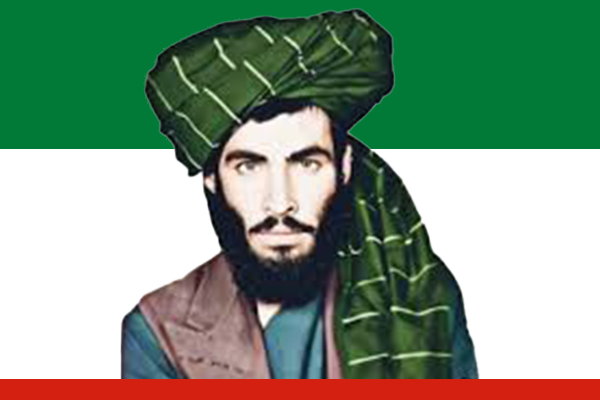
Early Life and Background
Mohammad Omar, often referred to as Mullah Mohammad Omar, was born around 1959 in Kandahar Province, Afghanistan. He belonged to the Hotak tribe of Pashtuns. Omar gained prominence during the 1980s as a mujahid fighting against the Soviet occupation of Afghanistan. After the Soviet withdrawal and the collapse of the communist regime, Afghanistan descended into civil war.
Rise of the Taliban
In 1994, Omar founded the Taliban movement with a group of religious students (talibs) from Islamic seminaries. Motivated by a desire to restore order through a strict interpretation of Islamic law, the Taliban quickly gained support. By 1996, the Taliban had captured Kabul and established the Islamic Emirate of Afghanistan. Omar, though reclusive, became the movement’s spiritual and political leader, holding the title Amir al-Mu’minin (Commander of the Faithful).
Rule and Governance
Under Omar’s leadership, the Taliban enforced a harsh version of Sharia law. Public executions, bans on women’s education and employment, and destruction of cultural artifacts, such as the Bamiyan Buddhas, defined his rule. While Omar rarely appeared in public or gave interviews, he maintained tight control over the Taliban regime and its policies.
Alliance with al-Qaeda and U.S. Invasion
Omar’s decision to provide sanctuary to Osama bin Laden and al-Qaeda after the 1998 U.S. embassy bombings — and especially following the September 11, 2001 attacks — brought international condemnation. When he refused to hand over bin Laden, the United States launched a military invasion. The Taliban government was quickly overthrown by the end of 2001.
Life in Hiding and Death
After the fall of the Taliban, Omar went into hiding. He was believed to be living in Pakistan or Afghanistan, though his exact whereabouts remained unknown for years. Reports later suggested he had little involvement in the Taliban insurgency after 2001. He reportedly died in 2013, but his death was only confirmed by the Taliban in 2015.
Legacy
Mohammad Omar remains a controversial figure in Afghan history. Supporters view him as a devout Muslim leader who stood against foreign occupation. Critics see him as a repressive autocrat who harbored terrorists and led one of the most oppressive regimes of modern times. His legacy continues to shape Afghanistan through the resurgence of the Taliban, who regained control in 2021.