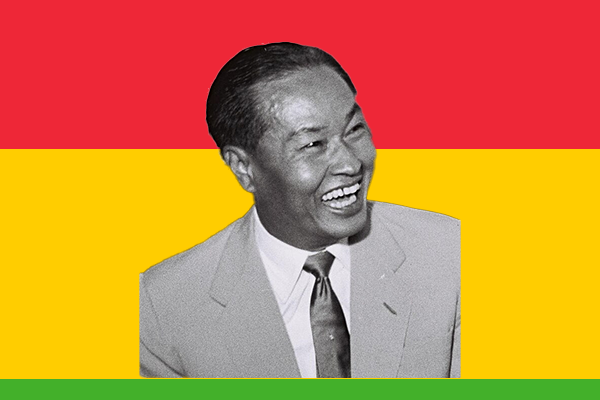
Early Life and Military Background
Ne Win was born as Shu Maung on 24 May 1910 in Paungdale, British Burma. He grew up during the colonial period, when nationalist movements began to challenge British authority. Ne Win joined the struggle for independence and quickly emerged as a disciplined and strategic leader. He worked closely with Aung San and became part of the “Thirty Comrades,” a group that played a decisive role in Burma’s fight for freedom. His military background shaped his leadership style, which emphasized strict control, loyalty, and order.
Rise to Power
After Myanmar gained independence in 1948, political instability and ethnic conflicts weakened civilian governments. Ne Win used this situation to strengthen the army’s role in national affairs. In 1958, he took charge of a caretaker government to restore order. Although he returned power to civilians in 1960, he remained influential within the military. In 1962, Ne Win led a military coup that overthrew the elected government. He then assumed control of the state and established himself as the country’s most powerful leader.
Presidency and Political System
Ne Win officially became President of Burma in 1974 after introducing a new constitution. He ruled under a one-party system led by the Burma Socialist Programme Party (BSPP). Ne Win eliminated political opposition and centralized authority within the military and party leadership. He presented himself as a guardian of national unity and sovereignty. Through firm control, he dominated Myanmar’s political system for more than two decades.
The “Burmese Way to Socialism”
Ne Win introduced the “Burmese Way to Socialism,” a policy that aimed to combine nationalism, socialism, and Buddhism. His government nationalized major industries, banks, and trade. Ne Win believed that state control would protect the country from foreign influence and exploitation. However, these policies weakened the economy. Mismanagement, isolation from global markets, and corruption caused shortages and inflation. Under his rule, Myanmar shifted from one of Southeast Asia’s richest nations to one of its poorest.
Impact on Society and Culture
Ne Win tightly controlled education, media, and public expression. His government restricted academic freedom and limited contact with the outside world. Many intellectuals and professionals left the country, causing a significant brain drain. Ne Win also enforced strict censorship to silence criticism. While he promoted Buddhism as a cultural foundation, he suppressed ethnic and political diversity. His policies deepened divisions between the state and ethnic minority groups.
Decline of Power and Legacy
By the late 1980s, public frustration with economic hardship and authoritarian rule reached a peak. In 1988, massive nationwide protests erupted against his system. Although Ne Win stepped down from formal leadership, the military continued to dominate politics. His influence remained strong behind the scenes. Ne Win died in 2002, leaving behind a deeply complex legacy.
Historical Significance
President Ne Win reshaped Myanmar’s political structure and defined the role of the military in governance. He maintained national unity through force but sacrificed democratic development and economic growth. Historians remember him as a powerful yet controversial leader whose decisions affected generations. His rule continues to influence Myanmar’s political and social landscape even today.