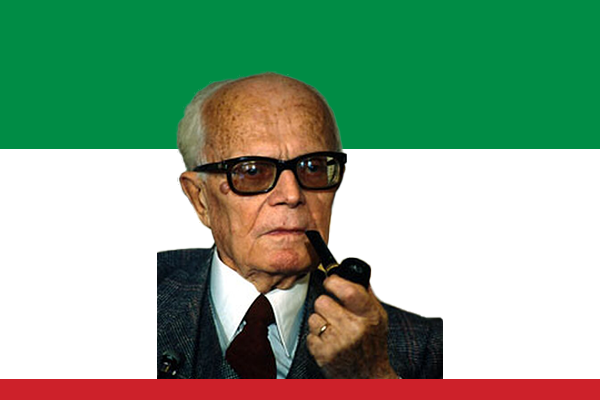
Early Life and Education
Pertini grew up in a humble family that valued education and civic responsibility. He studied law at the University of Genoa, where he developed strong political ideals rooted in equality and social justice. He admired democratic thinkers and openly opposed fascism, which was gaining influence in Italy during his youth. Pertini’s studies strengthened his belief that freedom and justice must stand at the center of every political system.
Opposition to Fascism
When Benito Mussolini rose to power, Pertini actively resisted the regime. He joined anti-fascist movements and distributed underground newspapers that promoted liberty and truth. In 1925, he publicly condemned Mussolini’s dictatorship, which led to his arrest and imprisonment. Authorities sentenced him to long years in prison, but he never renounced his beliefs. While incarcerated, he inspired other political prisoners with his courage and moral strength.
During World War II, after escaping confinement, Pertini joined the Italian Resistance. He led partisan fighters in their struggle against fascism and Nazi occupation. His leadership in the Resistance made him a national hero and a living symbol of Italy’s fight for liberation and democracy.
Political Career after the War
After the war ended, Pertini helped rebuild Italy’s democratic institutions. He actively participated in drafting the new Republican Constitution and worked tirelessly to promote civil rights and social welfare. Elected to the Chamber of Deputies in 1946, he became one of the leading voices of the Italian Socialist Party.
Pertini’s honesty, modest lifestyle, and direct communication style won public admiration. He consistently defended workers’ rights, social equality, and education for all citizens. His speeches inspired trust and unity, encouraging Italians to believe in the strength of their republic.
Presidency of Italy (1978–1985)
In 1978, the Italian Parliament elected Sandro Pertini as the seventh President of the Republic. As president, he actively represented moral integrity and national unity during a period marked by terrorism and political instability. He visited factories, schools, and hospitals, showing his closeness to ordinary citizens.
Pertini refused to isolate himself in the presidential palace. Instead, he met people across Italy, listened to their concerns, and reminded them that democracy belonged to everyone. He condemned violence, corruption, and political extremism, urging Italians to remain united in defending freedom.
His compassion extended beyond Italy’s borders. Pertini actively supported global peace efforts, denounced dictatorships, and encouraged cooperation among nations. His leadership combined authority with humanity, and he often used personal gestures—such as comforting victims’ families—to express empathy and solidarity.
Legacy and Personal Values
Pertini left the presidency in 1985 but continued to inspire future generations. He represented integrity in public service and moral courage in politics. Italians admired him for his humility, directness, and deep sense of justice. Even after retirement, he advocated for human rights and democratic principles, reminding leaders that honesty and compassion must guide every decision.
Sandro Pertini passed away on February 24, 1990, but his legacy endures. Streets, schools, and institutions across Italy bear his name, celebrating his enduring influence. His presidency remains a model of democratic leadership grounded in integrity and empathy.
Conclusion
President Sandro Pertini stood as a beacon of hope during turbulent times. He acted with conviction, served with humility, and led with moral strength. By defending democracy, supporting social justice, and remaining close to the people, he transformed Italy’s presidency into a symbol of unity and integrity. His life continues to remind the world that true leadership lies in service, courage, and compassion.