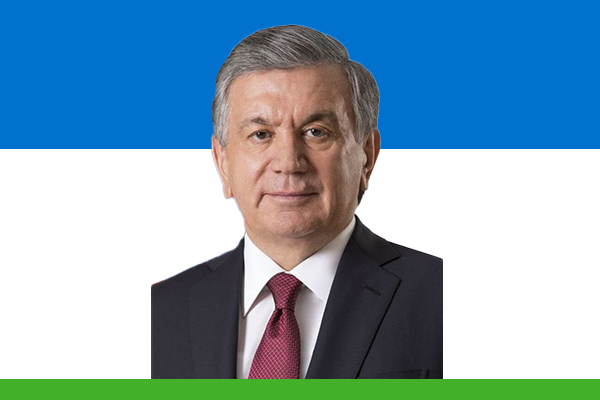
Mr. Shavkat Mirziyoyev
Assumed Office: 8 September 2016 – incumbent
Political Party: Uzbekistan National Revival Democratic
Home State: Zomin
Lifespan: born–1957
Country: Uzbekistan
Image credits available here.
Early Life and Education
Shavkat Mirziyoyev was born on July 24, 1957, in the Jizzakh region of Uzbekistan. He pursued higher education in engineering and graduated from the Tashkent Institute of Irrigation and Agricultural Mechanization Engineers. His academic background provided him with technical and administrative skills that later influenced his pragmatic approach to governance, particularly in agriculture and regional development.
Political Career and Rise to Power
Mirziyoyev began his political career in regional administration, serving in various leadership roles at the provincial level. He gained national prominence when he was appointed Prime Minister of Uzbekistan in 2003, a position he held for over a decade. During this period, he developed extensive experience in managing state institutions and coordinating large-scale development projects.
Following the death of President Islam Karimov in 2016, Mirziyoyev was elected President of Uzbekistan. His election marked a new chapter in the country’s political history, as expectations grew for reform and modernization.
Domestic Reforms and Governance
As Head of State, Shavkat Mirziyoyev launched an ambitious reform agenda aimed at improving governance and public administration. He emphasized accountability within state institutions and encouraged open dialogue between the government and citizens. Reforms in the judicial system focused on strengthening the rule of law, protecting individual rights, and reducing excessive bureaucracy.
Mirziyoyev also prioritized economic liberalization. He supported currency reforms, improved conditions for entrepreneurship, and sought to attract foreign investment. These measures aimed to create jobs, diversify the economy, and reduce state control over key sectors.
Social and Cultural Initiatives
Mirziyoyev’s leadership placed strong emphasis on social development. He promoted education reform, modernization of healthcare services, and increased support for youth and women. Cultural heritage and national identity received renewed attention, with policies designed to preserve historical traditions while encouraging innovation and creativity.
The government also focused on improving living standards, especially in rural areas, through infrastructure development and social welfare programs.
Foreign Policy and Regional Cooperation
In foreign affairs, Shavkat Mirziyoyev adopted a more open and cooperative approach. He worked to strengthen relations with neighboring Central Asian countries, emphasizing regional stability, trade, and shared development. His diplomatic initiatives improved cross-border cooperation and reduced long-standing tensions in the region.
At the global level, Mirziyoyev sought to enhance Uzbekistan’s international standing by engaging with major powers and international organizations. His foreign policy balanced national interests with constructive dialogue and economic partnerships.
Leadership Style and Legacy
Shavkat Mirziyoyev is widely recognized for his pragmatic and reform-oriented leadership style. He combined continuity in state stability with gradual but meaningful change. By encouraging openness, addressing long-standing challenges, and focusing on development, he reshaped public expectations of governance in Uzbekistan.
As Head of State, his legacy continues to evolve, but his presidency is already associated with a period of transition toward modernization, greater civic engagement, and stronger regional cooperation.