Mr. S. Mojaddedi
In Office: 28 April 1992 – 28 June 1992
Political Party: National Liberation Front of Afghanistan
Home state: Kabul
Lifespan: 1926–2019
Country: Afghanistan
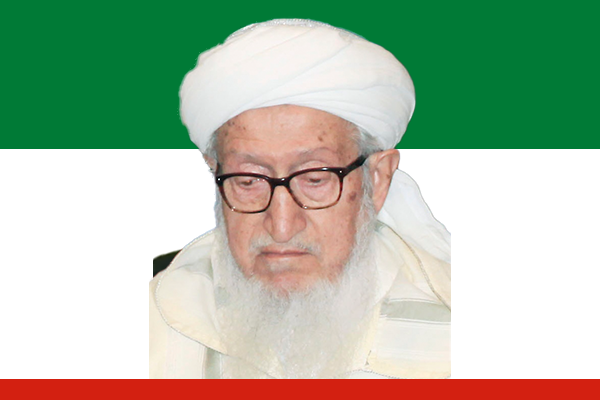
Early Life and Religious Heritage
Sibghatullah Mojaddedi was born in 1926 in Kabul, Afghanistan, into a distinguished religious family with deep spiritual roots. He was a descendant of the renowned 16th-century Islamic scholar Ahmad Sirhindi and belonged to the Naqshbandi Sufi order. This spiritual lineage gave Mojaddedi considerable religious authority and popularity among conservative and rural populations in Afghanistan. He studied Islamic theology and law both in Afghanistan and abroad, including at Al-Azhar University in Egypt, a center of Islamic learning.
Opposition to Communism and Soviet Occupation
When the People’s Democratic Party of Afghanistan (PDPA) seized power in the Saur Revolution of 1978, Mojaddedi emerged as one of its most prominent religious critics. In response to the Soviet invasion in 1979, he founded the Afghan National Liberation Front (ANLF)—a moderate Islamic and nationalist mujahideen faction based in Pakistan. While not among the most militarily powerful factions, the ANLF played a key role in the diplomatic and ideological resistance to Soviet influence.
Mojaddedi consistently advocated for an independent Afghanistan governed by Islamic principles, but he firmly opposed extremism and called for a moderate Islamic state. He also worked to maintain unity among the often-divided mujahideen factions.
Interim Presidency After the Fall of Communism
In 1992, after the collapse of Mohammad Najibullah’s regime, the mujahideen factions signed the Peshawar Accord, a political agreement to establish an interim government. Mojaddedi was selected to serve as interim President of Afghanistan, officially taking office on April 28, 1992. His appointment was seen as a compromise among rival factions due to his reputation as a moderate and spiritual leader.
His tenure lasted only two months, ending in June 1992, as internal rivalries between mujahideen commanders, including Ahmad Shah Massoud and Gulbuddin Hekmatyar, led to growing unrest and a shift of power. Nevertheless, Mojaddedi’s short presidency marked a significant moment in Afghan history—the transition from communist rule to Islamic governance.
Later Political Involvement and Peace Efforts
Though sidelined from executive power, Mojaddedi remained active in Afghan politics. Following the fall of the Taliban regime in 2001, he participated in the Bonn Conference, which laid the foundation for Afghanistan’s post-Taliban government. He later became chairman of the Meshrano Jirga (Upper House of Parliament) and the Afghan High Peace Council, promoting dialogue with insurgent groups and emphasizing national reconciliation.
Death and Legacy
Sibghatullah Mojaddedi died on February 11, 2019, at the age of 93. He is remembered as a religious scholar, freedom fighter, and transitional leader who played a vital role in shaping Afghanistan’s modern identity. Though his presidency was brief, his lifelong efforts for peace, national unity, and moderate Islamic governance earned him respect across Afghan society. Mojaddedi’s legacy stands as a reminder of Afghanistan’s complex journey from monarchy to conflict, and from war to attempts at peace and reconstruction.