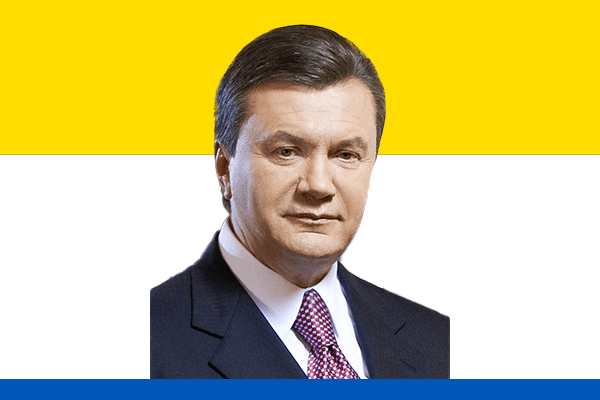
Mr. Viktor Yanukovych
In Office: 25 February 2010 – 22 February 2014
Political Party: Party of Regions
Home state: Yenakiieve
Lifespan: born 1950
Country: Ukraine
Image credit available here.
Early Life and Political Career
Viktor Fedorovych Yanukovych was born on July 9, 1950, in Yenakiieve, located in the Donetsk region of eastern Ukraine. He grew up in an industrial area that strongly influenced his political base later in life. Before entering national politics, he worked in transportation and management roles. Over time, he gained experience in regional administration and built a reputation as a strong political organizer in eastern Ukraine.
Yanukovych rose to prominence when he became Governor of Donetsk Oblast in 1997. In this position, he strengthened his ties with powerful industrial and business groups in the region. His leadership in Donetsk helped him gain national recognition. In 2002, President Leonid Kuchma appointed him Prime Minister of Ukraine. As prime minister, Yanukovych promoted closer cooperation with Russia and represented the interests of Ukraine’s eastern, Russian-speaking population.
The 2004 Election and Return to Power
Yanukovych first ran for president in 2004. The election became one of the most dramatic events in Ukrainian political history. Official results initially declared him the winner, but widespread allegations of electoral fraud sparked mass protests known as the Orange Revolution. Demonstrators demanded a fair vote and supported opposition candidate Viktor Yushchenko. The Supreme Court of Ukraine ordered a repeat of the runoff election, and Yushchenko won.
Although Yanukovych lost the presidency in 2004, he remained a major political force. He rebuilt his influence through the Party of Regions, which drew strong support from eastern and southern Ukraine. In 2006 and again in 2007, he served as Prime Minister. During these years, he positioned himself as a pragmatic leader focused on economic growth and regional balance.
Presidency and Major Challenges
In 2010, Yanukovych defeated Prime Minister Yulia Tymoshenko and became President of Ukraine. His victory marked a political comeback and reflected the country’s deep regional divisions. As president, he aimed to centralize power and maintain Ukraine’s neutrality between the European Union and Russia. However, many critics argued that he increasingly favored Russia.
One of the defining moments of his presidency came in late 2013. Ukraine had prepared to sign an association agreement with the European Union, which many citizens saw as a step toward closer European integration. However, Yanukovych suddenly suspended the agreement and chose to strengthen ties with Russia instead. This decision triggered massive protests in Kyiv and other cities. These demonstrations, known as Euromaidan, grew into a broad movement against corruption, authoritarianism, and foreign influence.
Downfall and Legacy
As protests intensified, clashes between demonstrators and security forces became deadly. Public anger rose sharply after violence erupted in central Kyiv. In February 2014, Yanukovych fled the capital and later surfaced in Russia. The Ukrainian parliament voted to remove him from office, arguing that he had abandoned his constitutional duties.
After leaving Ukraine, Yanukovych continued to claim that he remained the legitimate president. Ukrainian authorities charged him with treason and other crimes. In 2019, a Ukrainian court convicted him in absentia of treason for requesting Russian military intervention during the crisis.
Viktor Yanukovych’s legacy remains deeply divisive. Many Ukrainians remember him as a symbol of corruption and failed leadership. Others see him as a politician who represented eastern Ukraine during a time of sharp national division. His presidency ended dramatically, but its consequences continue to influence Ukraine’s politics, identity, and relations with Russia and the West.