Early Life and Rise in Politics
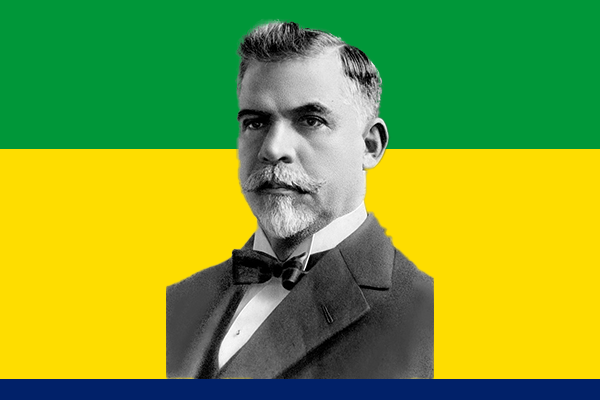
Washington Luís Pereira de Sousa was born on October 26, 1869, in Macaé, Rio de Janeiro. He grew up in a family that valued education and civic responsibility. After completing his law degree from the University of São Paulo’s Law School, he built a reputation as an articulate and practical lawyer. His political career began in the early years of the Brazilian Republic, and he quickly gained prominence through his administrative ability and conservative ideals.
He served as Mayor of São Paulo, where he modernized the city’s infrastructure. He supervised the paving of streets, expanded the transportation system, and introduced projects to improve public health and sanitation. His success as mayor made him a respected figure in São Paulo’s politics, paving the way for higher offices.
Governorship of São Paulo
As Governor of São Paulo from 1920 to 1924, Washington Luís emphasized economic growth and modernization. He promoted the construction of new highways to connect the coffee-producing regions to export ports, strengthening the state’s economy. He also encouraged public education reforms and improved police organization to maintain stability during turbulent times.
During his governorship, he faced the 1924 revolt in São Paulo, which erupted due to dissatisfaction within the army and middle class. Washington Luís acted decisively by coordinating government forces to suppress the rebellion and restore order. His firm leadership during the crisis increased his national visibility and earned him the backing of influential political elites, particularly the coffee oligarchs.
Presidency and National Modernization
In 1926, Washington Luís became the President of Brazil. He pursued policies to stabilize the economy, modernize transportation, and strengthen Brazil’s ties with foreign investors. He believed that “governing is opening roads,” and he prioritized highway construction to connect remote regions and stimulate commerce.
Under his leadership, Brazil experienced notable progress in infrastructure and urban development. He encouraged private investment in railways, ports, and energy projects. His administration also supported industrial expansion and the growth of national companies. However, his focus on fiscal austerity and his conservative stance alienated sections of the working class and the military.
Political Turmoil and the 1930 Revolution
Despite his achievements, Washington Luís faced growing political unrest during the late 1920s. The world economic crisis of 1929 severely affected Brazil’s coffee-dependent economy, causing falling prices and unemployment. Many regional leaders demanded economic relief, but Washington Luís refused to intervene directly, believing in free-market solutions.
In 1930, his decision to support Júlio Prestes as his successor angered many political factions, including those from the southern states and the military. When Prestes won the election, opposition forces accused the government of fraud. Soon after, a revolutionary movement led by Getúlio Vargas erupted. The army, previously loyal to Washington Luís, withdrew its support.
On October 24, 1930, the military forced Washington Luís to resign, marking the end of the Old Republic. Vargas assumed power, initiating a new era in Brazilian politics.
Exile and Later Life
After his removal, Washington Luís lived in exile in France and Portugal. He remained interested in Brazilian affairs but refrained from political involvement. In 1947, he returned to Brazil, where he spent his final years quietly. He died on August 4, 1957, in São Paulo, leaving behind a legacy marked by modernization and the fall of an era.
Legacy
Washington Luís is remembered as a symbol of Brazil’s transition from oligarchic rule to a more populist political system. He modernized transportation and administration, but his resistance to political reform and social change made his government vulnerable. His downfall demonstrated the growing demand for broader representation and economic flexibility in Brazilian society.